
 Get a quote
How to Balance Energy vs Protein in Animal Feed Formulation
5 May 2026 - Admin
Having the perfect balance of energy and proteins is an important factor in animal nutrition. It affects the performance in growth, reproduction, feed conversion ratio (FCR), state of health, and economic profitability in animal production. Energy is needed for important functions such as locomotion, thermoregulation, food digestion, and production in terms of meat, milk, and eggs. Protein, on the other hand, is necessary for tissue formation, enzyme synthesis, hormones, and immunology.
When the balance between energy and protein is not achieved, there will be poor efficiency in the use of nutrients, even if the feed intake is sufficient. Too much protein and less energy will result in excess nitrogen wastes, whereas excess energy with low protein will create too much fat. Feed formulation, therefore, is more than just feeding animals.
Understanding Energy in Animal Feed
The term energy in animal nutrition is used to indicate the usable calories contained in animal feeds. It is not a nutrient, but it indicates the level of nutrients contained in the food material. The measurement of energy is done by digestible energy, metabolizable energy, or net energy based on the level of utilization of energy in the body of the animal.
Sources of Energy
The important raw material for animal feed production are carbohydrates, fats, and proteins. Feed materials that have high levels of energy include maize, wheat, barley, sorghum, rice bran, and oils such as soybean and palm oil. Molasses and agricultural wastes are also used as sources of energy for ruminants.
Also Read: Types of raw material in animal feed production
Energy and Its Importance
The importance of energy for the following processes:
- Cellular metabolism involving heartbeat and respiration
- Growth and development
- Formation of milk and eggs
- Activities and thermoregulation
- Breedability
Effects of Energy Imbalance
Lack of energy leads to fat and protein breakdown in the animal’s body in order to keep the organism alive; hence, the animal becomes thin and has poor growth. On the other hand, excess energy makes the animal gain unnecessary fat.
Understanding Protein in Animal Feed
Of all nutrients, protein is the most important one to animals. Protein comprises amino acids, which are the basic components used in constructing body tissue and are involved in virtually all biological processes. Moreover, there are essential and non-essential amino acids required by animals. The essential amino acids are those derived from feed while the latter is synthesized within the animal’s body.
Sources of Protein
The main sources of protein include soybean meal, groundnut cake, sunflower meal, canola meal, fish meal, and meat and bone meal. Some other sources include synthetic amino acids such as lysine, methionine, and threonine.
Protein Functions
Proteins perform the following functions:
- Building muscle and tissues
- Production of enzymes and hormones
- Boosting the immune system
- Creation of milk and meat along with eggs
- Tissue repair and maintenance in the body
Protein Balance Issues
A lack of protein results in malnutrition and poor feather development in birds along with impaired immune function and reduced reproduction rates. On the other hand too much protein has its negative effects as well.
What is the Relationship Between Energy and Protein?
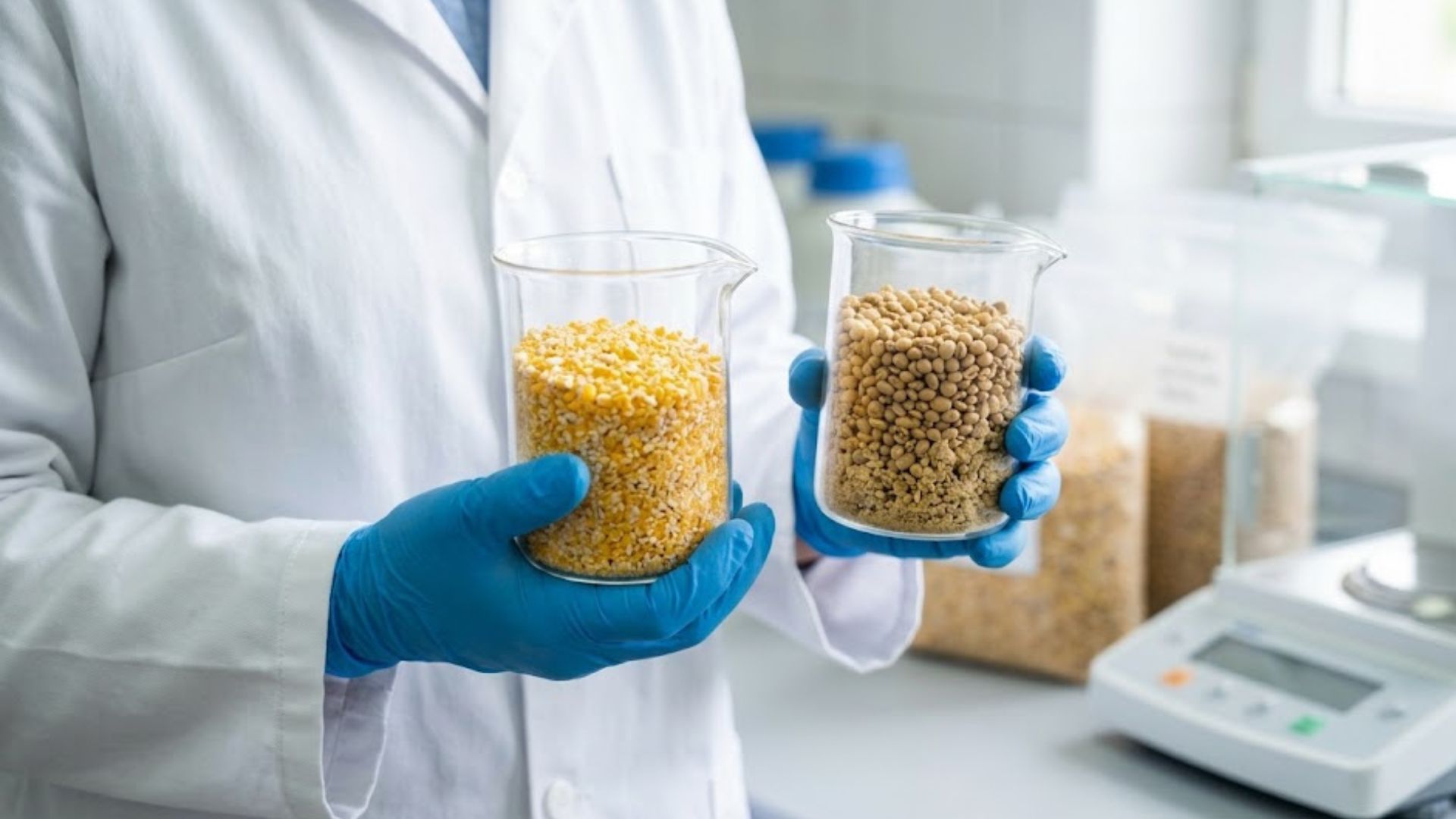
Complementary roles of protein and energy metabolism exist in the metabolism of the animals. Protein can only be successfully metabolized with adequate provision of energy. In order for body tissues to be metabolized, there must be enough supply of energy, otherwise, amino acids are subjected to deamination processes to metabolize for energy rather than body tissue growth.
The complementary roles may better be explained using the energy-to-protein ratio. Whereby in poultry animals, it is important to consider metabolizable energy (ME) against crude protein (CP) or amino acids digestion, whereas, when dealing with pigs, the lysine-to-energy ratio becomes important because lysine is the first limiting amino acid in the animal’s growth process.
Another concept that can be applied in this regard is the “ideal protein concept.”
Factors Affecting Energy-Protein Balance
There are a few factors that influence the ratio of energy and protein needed in feeds.
Considerations Regarding Species
All animal species are not alike in terms of digestive system and nutrient needs. For instance, birds like chickens will require high-quality feeds rich in energy and proteins to meet their needs. Ruminant species like cattle and sheep rely on the rumen bacteria in the fermentation of proteins and digestion. Fish do not have good digestive systems and hence will require proteins with high digestibility alongside energy.
Developmental Stage of the Animals
When young, animals will require more proteins in their diets compared to when mature. Mature animals will need more energy in order to maintain bodily functions and store fat. This is the reason for a high protein level in starter feeds for broilers compared to finishing feeds.
Aims of Production
The production of meat from these animals requires feedstuffs that help develop muscles and not body fats, whereas, for the dairy group, it requires foods that contain energy and proteins to aid in milk production. Foods containing substances that aid in the reproduction process and not fattening should be fed to the breeding group.
Environment
Animals will eat less food in a hot environment; therefore, there is a need to raise energy levels in their diet. In a cold environment, the animal requires more energy due to the increased energy requirement to keep warm.
Feed Ingredients and Their Role
The selection of ingredients in formulating poultry feed is an important aspect of the process.
Energy-containing ingredients such as maize, wheat, and animal fats are formulated into feed in order to cater to the calorie requirements of the birds.
Corn is often preferred as an energy source because of its energy concentration and ease of digestion.
Oil/fat is added to the ration in order to increase energy without increasing the weight of the ration.
Soyabean meal and fish meal are good sources of proteins. Soybean meal is chosen because of its complete amino acids profile and availability.
The advantage of fish meal is that it is highly digestible and rich in nutrients. However, fish meal is comparatively more expensive than soyabean meal. Enzymes and probiotics can be added to improve the digestibility of nutrients; hence crude protein levels can be reduced.
Formulation Method Definition Functionality/Lessons Learned
| Method | Description |
|---|---|
| Least Cost Formulation | The process whereby mathematical computation is applied in developing animal feed to minimize costs yet satisfying all nutritional needs in the feed. This practice is popular among industrialized feed manufacturing firms. It ensures minimal costs while supplying adequate energy, protein, vitamins, and minerals in the diet. |
| Linear Programming | An optimization process in making up of animal feed using computer analysis and incorporating many nutrients constraints such as energy, proteins, amino acids, among others. It combines many feed ingredients into one optimal ration. |
| Phase Feeding | An animal feeding system developed based on the stage of development of animals from young to matured ages. Different kinds of diets, namely, starters, growers to finishers are used, depending on the growth stage of animals. It responds to changing nutritional needs of growing animals. |
| Precision Nutrition | An innovative animal feeding process relying on current performance of animals for optimal feed composition. It ensures optimum supply of energy and proteins among others in animal diets. |
Imbalances commonly found and consequences
When there is an abundance of protein but an inadequate amount of energy, animals will use proteins for energy production. Under such circumstances, the animal faces heavy losses and causes nitrogen pollution. An abundance of energy and a lack of protein will lead to the formation of excessive fat instead of muscles.
Nutrient utilization and digestibility
Not all nutrients contained in animal feed can be effectively used by the animals. It is therefore important to focus on the digestible energy and protein instead of total energy and protein. The anti-nutritional substances found in natural feed must be eliminated.
The amino acid digestibility is very significant in the nutrition of poultry and pigs.
Guidelines for Practical Feed Formulations
The formulator must define the goals that will be sought through the formulation process, for instance, the rate of gain or milk yield. The formulation will have to be carried out according to the nutrient requirement of different species.
There is need for performance evaluation, where feed conversion ratios will be continuously monitored. It will also be necessary to check for changes in the nutrient content of ingredients.
Also Read: Animal feed price list in India
Conclusion
The energy-protein ratio in feed formulation is a science and a business process. At Prodigy Foods we tells that when formulating feed, energy-protein balancing will maximize nutrient utilization, increase performance, and reduce the adverse effects of feed manufacturing. Due to new scientific studies, computer modeling, and precision feeding practices, feed formulation today is more precise than ever before. In summary, energy-protein ratio formulation is critical in animal production business management.
FAQs
Why is energy necessary in animal feeds?
Energy acts as the fuel source for biological activities such as movement, growth, breeding, and maintenance of body temperature. When there is low energy in animal feeds, animals would not be able to utilize proteins effectively; hence growth retardation, loss of weight, and low productivity.
Why do animals need protein?
Proteins provide the body with the amino acids needed in muscle development, creation of enzymes and antibodies, and in tissue repair. Inadequate proteins cause slow growth rate and low immunity levels. Excess proteins in animal feed increase feed costs due to nitrogen wastes.
How does species affect energy-protein ratios?
Each animal requires energy and protein based on its digestive system and nutritional needs. While swine and poultry are energy-rich diets, ruminants require fermentative activity of the microbial population in their digestive system to breakdown feeds. Fish require high levels of energy and protein-rich foods.
How can growth stages affect energy-protein ratios?
The young stage has high protein demands because protein promotes tissue development. Adult animals have high energy requirements to either produce or maintain product levels. The beginning diet comprises high protein levels while the finishing diet contains high energy content.
How is phase feeding accomplished?
This feeding process entails making changes in the ration of feeds in accordance with the developmental phases of the animals. This helps to ensure that the nutrient requirements of animals are satisfied during certain phases of development and thus makes the process efficient.
How would you describe precision nutrition when feeding animals?
It is where feeds are formulated according to the actual performance of the animals. The process is effective since formulation is done taking into consideration the energy and protein requirements of the animal, which makes the animal more productive.
What impact does unbalanced energy and protein have on feed use?
Unbalance results in inefficiencies in the consumption of feeds and animal sickness. An instance is where there is an imbalance of high protein feeds and low energy feeds, which results in wastage.