
 Get a quote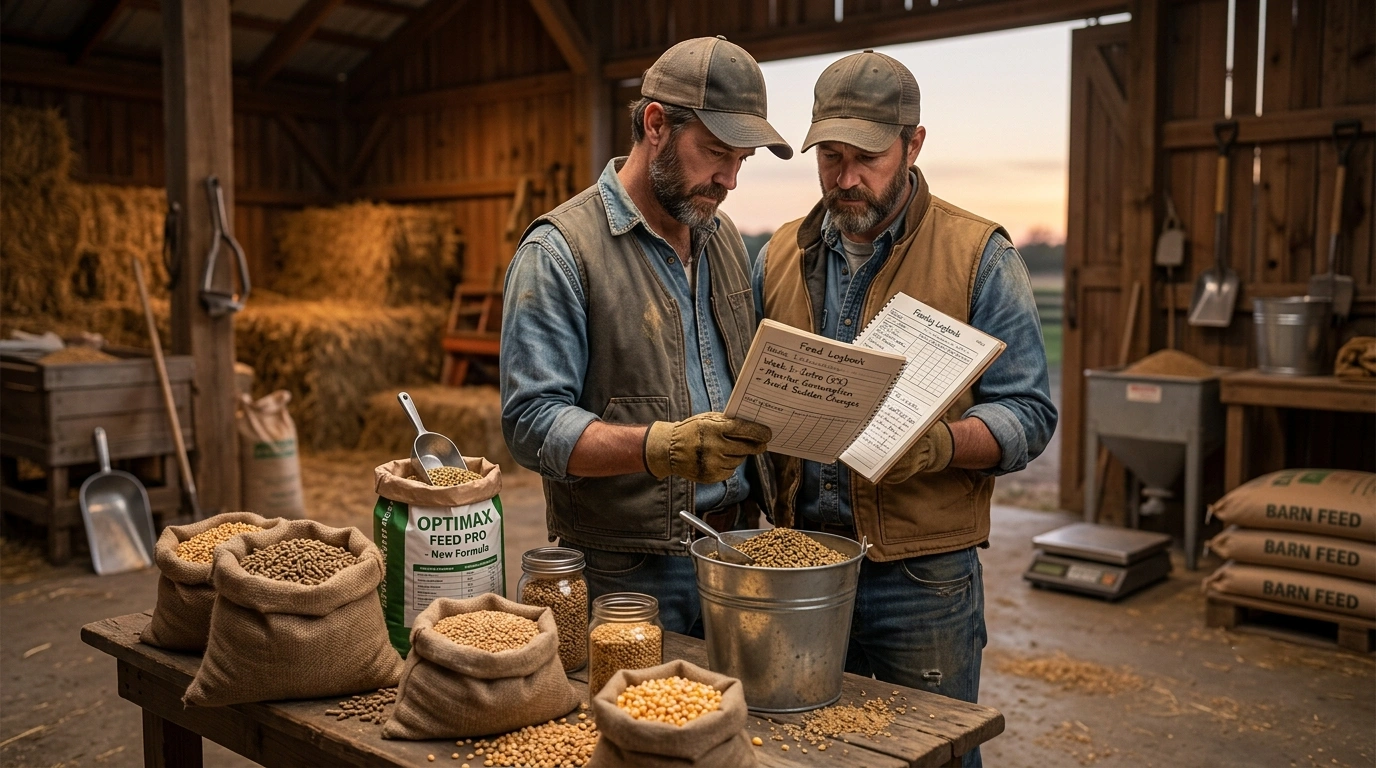
Common Mistakes Farmers Make When Switching To A New Feed Ingredient
21 Jul 2026 - Admin
Switching to a new feed ingredient is one of those decisions that looks simple on paper. You find a better price, a higher protein value or a more consistent supply and then you make the change. But what actually happens on the ground is very often different from what was in fact planned. This is especially true across the dairy farms and poultry operations in states like Punjab, Haryana, Rajasthan and Uttar Pradesh. The mistakes farmers make when switching to a new feed ingredient are rarely ever about bad intentions. They are almost always about the missing steps.
It could be a transition period cut short, a ration not recalculated or a supplier’s COA never requested, every mistake counts. And the cost of those missing steps shows up in the animals. You may notice lower milk yield, slower weight gain and digestive upset. A drop in feed conversion efficiency is one of the biggest issues that takes weeks to recover from.
The Livestock Sector Of India At A Glance
The total contribution of India’s livestock sector to GVA at current prices for 2022-23 is estimated at approximately ₹13,55,460 crores. In spite of that, the average milk yield per head of Indian cattle is around 1,172 kg, which is about half of the average world figure, due to poor quality and inappropriate feed formulations. (Pashudhan Praharee, 2022)
The potential is enormous. The gap between where Indian livestock productivity sits today and where it could be is often closed or widened at the feed ingredient level.
At Prodigy Foods, we supply feed raw materials including Rice DDGS, Corn DDGS, Rice Gluten Meal, Maize Gluten, Guar Korma, Roasted Guar Korma and Maize Fiber to farmers and feed manufacturers across India. We have seen both sides of this, be it the transitions that went smoothly and the ones that did not. Here is what separates them.
What Common Mistakes Farmers Make When Switching to a New Feed Ingredient
Mistake 1: Switching Abruptly Instead of Transitioning Gradually
This is the most frequent mistake in feed ingredient transition for cattle and poultry. It’s the one with the most immediate consequences. A farmer replaces their existing protein source with Rice DDGS or Corn DDGS overnight. It is done at a full inclusion rate and the animals show signs of digestive stress just within the first 48 to 72 hours. This is seen in the form of loose droppings in cattle, reduced feed intake in poultry along with a visible dip in milk production.
The rumen microbiome that is there in cattle and the gut microbiota in poultry take time to adapt to a new substrate. A new ingredient even if it’s a high-quality one, introduces different fibre fractions, amino acid profiles and fermentation characteristics. When the switch is abrupt, the microbial population that has been optimised for the old ration cannot process the new one efficiently.
The fix is straightforward. All you have to do is introduce the new ingredient at 25 to 30% of its target inclusion in week one. Then move to about 50 to 60% in week two and reach the full inclusion by week three. The transition period costs nothing. Skipping it costs weeks of compromised production.
Mistake 2: Not Recalculating the Ration After the Switch
Different ingredients have different nutrient profiles. This sounds obvious, but it is actually very regularly overlooked in animal feed raw material change decisions, especially at the farm level.
A farmer who’s switching from groundnut cake (45 to 48% crude protein) to Guar Korma (46% crude protein) may assume that the swap is one to one. But the energy value, amino acid balance, fibre content and phosphorus levels are different. The animal receives a nutritionally imbalanced diet if the ration is not recalculated. That’s what happens even though the bag says 46% protein on both ingredients.
The same applies when you’re moving to Maize Gluten at 60% crude protein. A higher protein ingredient at the same inclusion rate as a 30% protein source means that the total ration protein climbs well above the requirement. This is not a bonus because excess protein is expensive and metabolically wasteful.
Recalculate the full ration before any feed ingredient switch. Adjust inclusion rates to hit the target nutrient profile and not just the target protein number.
Mistake 3: Choosing Based on Price Per Bag Rather Than Cost Per Unit of Protein
This is the feed formulation mistake that costs Indian farmers the most money, that too silently, over time.
A lower priced ingredient that delivers 30% crude protein costs more per unit of the actual protein that is delivered than a slightly higher priced ingredient at 45% crude protein. The difference compounds quickly when you are feeding hundreds of animals daily.
Take Rice DDGS as an example. At 44 to 45% crude protein and approximately 3,100 to 3,300 Kcal/kg, it delivers significantly more nutrition per rupee than many conventional protein sources. This is the case when the cost-per-kg-of-protein calculation is done correctly. Farmers who evaluate DDGS feed ingredient switches purely on sticker price, without calculating cost-per-unit-of-protein, have to consistently pay more for less.
The right question before switching is not “which ingredient is cheaper?” It’s really just “which ingredient costs less per unit of the nutrient I actually need?”
Mistake 4: Not Verifying the Ingredient Quality Before Buying
In switching feed ingredients for livestock in India, one of the most important things to know is this: the declared specification on a bag and the actual specification in that batch are sometimes two different things. That’s esspecially the case when you’re sourcing from uncertified suppliers.
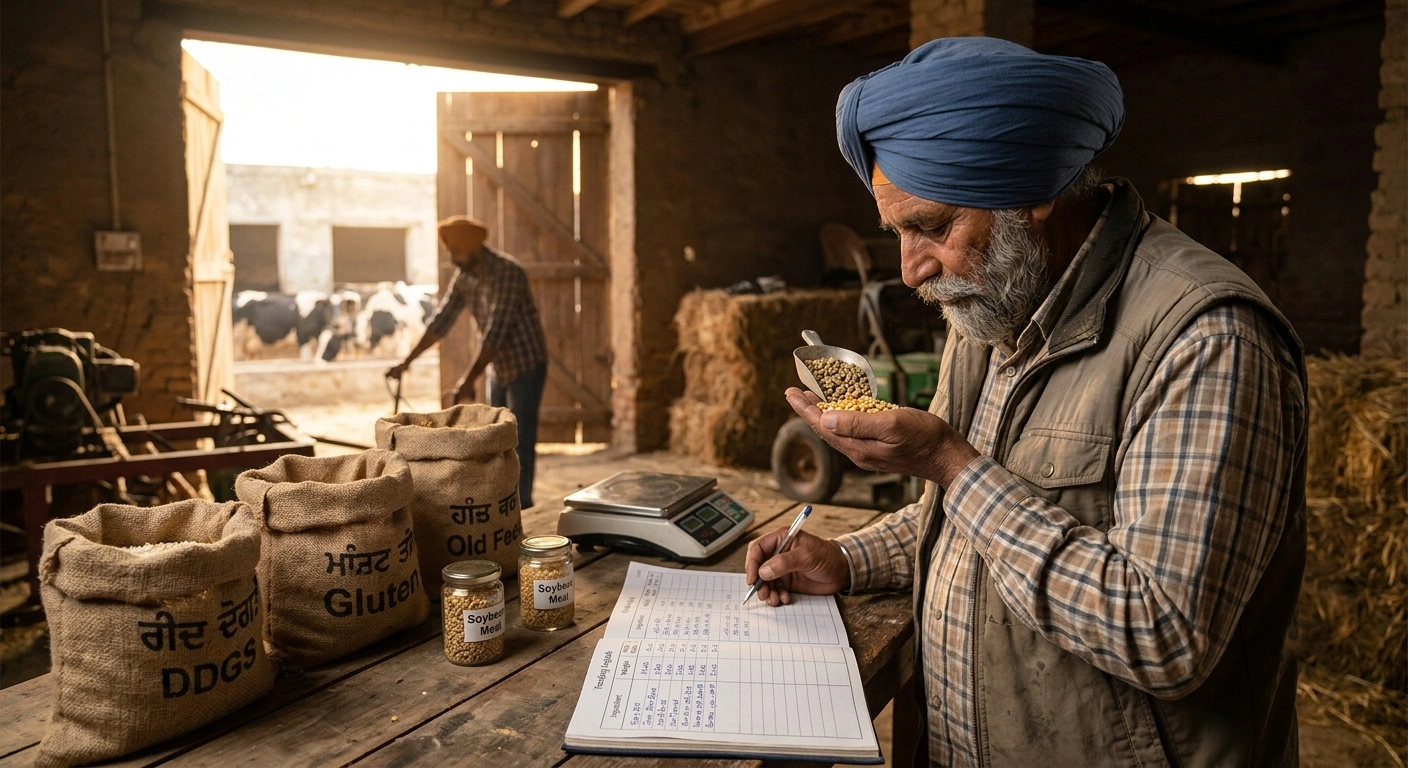
A batch of Corn DDGS declared at 30% crude protein may arrive at about 24 to 25% if it was produced without any proper quality controls. A bag of Rice Gluten Meal declared at 40% protein may carry some excess moisture that shortens its shelf life and dilutes the nutritional value. Without a batch specific Certificate of Analysis, you are formulating on faith. It should be covering crude protein, moisture, oil, fibre, energy and mycotoxin levels. So always request a COA before the first order. If a supplier cannot provide one, that is itself important information.
Mistake 5: Ignoring Anti-Nutritional Factors in the New Ingredient
Some feed ingredients carry naturally occurring anti nutritional factors that reduce its digestibility or even interfere with its nutrient absorption if it is not managed correctly. Raw guar meal, for instance, actually contains trypsin inhibitors and saponins. These can can suppress feed intake and reduce its protein digestibility in monogastric animals like poultry.
This is exactly why Roasted Guar Korma exists. The roasting process breaks down trypsin inhibitors and also enhances amino acid digestibility. This makes it safe and effective at higher inclusion rates. Farmers who switch to standard guar meal to save cost, without understanding this, make a big mistake. They very often observe reduced palatability and poorer growth performance, and incorrectly conclude the ingredient does not work.
When you’re evaluating any new animal feed raw material, don’t forget to check whether it carries ANFs and whether the product form you are sourcing has been processed to address them.
Mistake 6: Skipping a Monitoring Period After the Switch
The switch has been made, the ration has been adjusted and the new ingredient is in the feed. Many farmers stop paying close attention at this point. That is a mistake.
The first four to six weeks after any feed ingredient transition for cattle or poultry is the critical window. So monitor the key indicators daily during this period: milk yield in dairy animals, feed intake levels, body condition score, droppings consistency and weight gain trajectory in broilers or growers. Any small deviations that you catch early can be corrected quickly. Deviations that go unnoticed for weeks compound into significant productivity losses.
Mistake 7: Switching Multiple Ingredients at the Same Time
If you change two or three ingredients simultaneously and then the production drops, you basically have no way of knowing which ingredient caused it. Troubleshooting becomes guesswork. This is one of the most common mistakes farmers make when switching to a new feed ingredient.
Change one ingredient at a time. Complete the full transition period and monitoring window for each change before you introduce the next. It takes longer, but it keeps the cause and effect relationship clear. That clarity is what allows you to make better sourcing decisions going forward.
A Note on Ingredient Selection for India’s Conditions
The feed market of India has access to an increasingly strong range of quality byproduct ingredients. Many are produced domestically from the growing ethanol sector of the country. Rice DDGS, Corn DDGS, Maize Gluten and Maize Fiber are all produced in India now at commercial scale. This makes them cost competitive alternatives to imported protein sources.
The key to unlocking the productivity potential in these ingredients is not just choosing the right product. It’s about making the switch correctly.
Need help selecting the right ingredient for your ration? Prodigy Foods supplies laboratory tested Rice DDGS, Corn DDGS, Guar Korma and more. You get with batch wise COAs on every order. Contact us →
Conclusion
The mistakes farmers make when switching to a new feed ingredient are almost always avoidable. These are not complicated steps whether it is a phased transition, a recalculated ration, a cost per nutrient comparison instead of a price per bag comparison, a COA from the supplier and a disciplined monitoring period in the first few weeks. But they are the steps that separate a successful ingredient switch from an expensive one.
The livestock sector of India has the right scale and the potential to perform far better than what its current productivity averages suggest. Closing that gap always starts with better feed formulation decisions and better sourcing choices. These need to be made with the right information, the right ingredient quality and the right transition process.
Prodigy Foods supplies Rice DDGS, Corn DDGS, Rice Gluten Meal, Maize Gluten, Guar Korma, Roasted Guar Korma and Maize Fiber with verified quality data and consistent specifications across every dispatch. Contact Prodigy Foods at +91-98763 28135 or info@prodigyfoods.in to discuss your sourcing requirements.
Frequently Asked Questions: Mistakes Farmers Make When Switching to a New Feed Ingredient
Q1. How long should the transition period be when switching to a new feed ingredient?
A – A transition period of two to three weeks is recommended for most livestock, be it cattle, buffaloes, and poultry. Start by first replacing 25 to 30% of the old ingredient with the new one in week one. Then move to 50 to 60% in week two and finally reach the full inclusion by week three. This gives the rumen microbiome in cattle and the gut microbiota in poultry time to adapt. Risk of digestive upset, intake drop or milk yield loss reduces this way during the feed ingredient transition.
Q2. Can I switch from soybean meal directly to Rice DDGS in a cattle ration?
A – Yes, but not all at once. Rice DDGS at 44 to 45% crude protein is a strong alternative to soybean meal, but the amino acid profile, bypass protein fraction and fibre levels are different. Recalculate the ration before you make the switch and you may need to adjust inclusion rates to maintain the same crude protein and energy targets. Use a phased transition of two to three weeks and then monitor the milk yield and body condition closely during that window.
Q3. What is a COA and why do I need one when buying a new feed ingredient?
A – A Certificate of Analysis (COA) is a batch specific laboratory report which shows the actual measured values of crude protein, moisture, oil, fibre, energy and mycotoxin levels for that specific lot of feed raw material. It proves that what is declared on the bag also reflects what is actually in the bag. Any reputable feed raw material supplier in India should provide a COA as standard.
Q4. Is Roasted Guar Korma better than regular Guar Korma for poultry feed?
A – For poultry and monogastric animals, yes significantly. Regular Guar Korma has trypsin inhibitors and saponins that reduce the digestibility and can even suppress feed intake in poultry. Roasted Guar Korma, which is processed through controlled heat treatment, breaks down these anti nutritional factors and enhances amino acid digestibility.
Q5. Why did my cattle’s milk yield drop after I switched feed ingredients?
A – A sudden drop in milk yield after switching feed ingredients for livestock is mostly caused by one of three things: an abrupt transition that disrupted rumen function, a ration that was not recalculated after the switch or a quality issue with the new ingredient. Check all three.
Q6. Which Prodigy Foods ingredients are best for farmers switching away from conventional protein sources?
A – For dairy cattle switching away from groundnut cake or soybean meal, Rice DDGS (44 to 45% CP and high bypass protein) and Guar Korma (46% CP) are the most direct alternatives. For poultry, Corn DDGS (30% CP, moderate fibre), Maize Gluten (60% CP) and Roasted Guar Korma (55%+ CP, ANF-free) are all high performance options.