
 Get a quote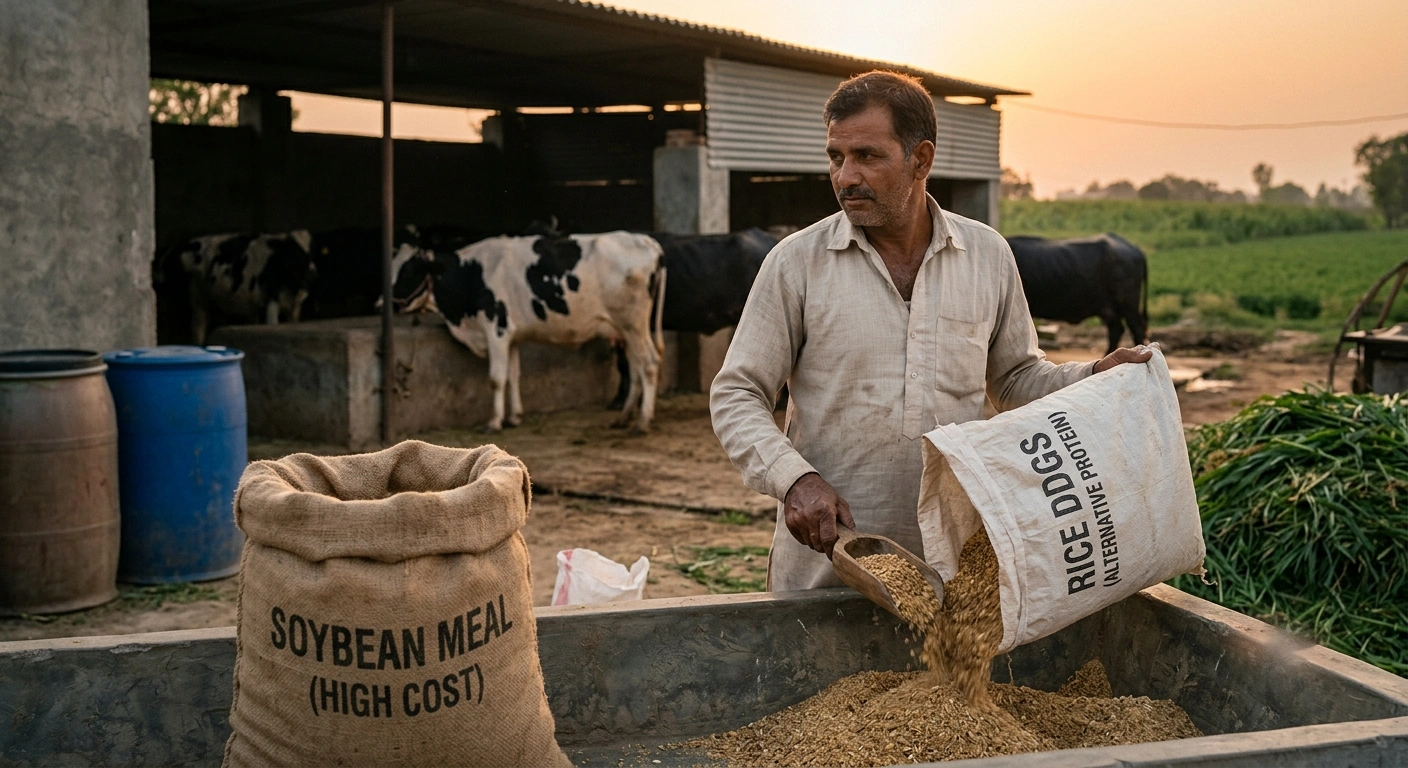
How Rising Soybean Prices Are Pushing Farmers Toward Alternative Protein Sources
22 Jul 2026 - Admin
Something shifted in the feed industry of India in early 2026 and farmers were the first ones across the country to feel it almost immediately. Rising soybean prices are pushing farmers toward alternative protein sources way faster than anyone has anticipated. And this transition that many nutritionists had been recommending for years is now happening out of necessity instead of planning.
Soybean meal has been the default protein source in Indian livestock, poultry and aqua feed for decades. It is familiar, it is widely available and it has a solid nutritional profile. But it has always had one vulnerability: It is tied to a single crop cycle, a single geography along with a supply chain not fully controlled by India yet. Consequences ripple when that supply chain breaks as it did in 2025 to 26. This is seen across every feed mill, dairy farm and poultry shed that is there in the country.
The farmers of today are not confused about whether they should find a soybean meal alternative for cattle feed and poultry. Their focus is more on which one to choose and making the switch without hurting production.
India’s Soybean Crisis in Numbers
This is not a gradual price trend. It is a supply shock with immediate consequences:
According to NutriNews,
- The soybean kharif crop of India in 2025 to 26 came in at about 12.7 million tonnes. This is basically a 17% drop from 15.1 million tonnes the last year. The Compound Livestock Feed Manufacturers Association of India had confirmed that soybean meal prices surged over 40% in weeks. It is reaching about ₹65 to 66 per kg which is the highest in four years.
- Feed makes up for 65 to 70% of the total poultry production costs. Soybean meal is still the primary protein source across poultry, aqua and livestock feed formulations in India.
- Compound feed prices went from around USD 0.58 per kg to about USD 0.73 per kg within just weeks. This squeezes margins for the poultry integrators and dairy operators across Maharashtra, Andhra Pradesh and Punjab.
Industry estimates show that poultry sector profitability can decline by about 50% in the 2025 to 26 marketing year. This is driven almost fully by the combined rise in maize and soybean meal costs.
Why Soybean Meal Has Always Been a Fragile Dependency
Soybean meal is a genuinely good feed with its 44 to 48% crude protein and good amino acid balance. It is actually widely understood by nutritionists. Both its nutritional profile and its supply familiarity made it dominant in Indian feed formulations. But restrictions of India on genetically modified soybean imports limits the ability of the country to buffer domestic supply shocks through imports. This means there is no easy valve to open when a poor kharif season cuts domestic output by 17%. The structural vulnerability was always there. It became unavoidable this year.
The answer is not to abandon all soybean meal entirely. It is to reduce any dependence of a ration on a single ingredient this exposed to weather, crop cycles and trade policy.
How Rising Soybean Prices Are Pushing Farmers Toward Alternative Protein Sources For Livestock
There has never been better access to high quality alternative protein feed ingredients in India. The growth of the domestic ethanol sector under the National Biofuel Policy has helped a lot. It has led to a consistent domestic supply of byproduct ingredients. These rival or even exceed soybean meal on key nutritional parameters.
Here is how the main alternative protein sources for livestock compare at a glance:
| Ingredient | Crude Protein | Best For | Key Advantage |
| Rice DDGS | 44 to 45% | Dairy cattle and buffalo | High bypass protein supports milk synthesis directly |
| Corn DDGS | About 30% | Poultry and cattle | Energy + protein combined; lower fibre than roughage |
| Maize Gluten | About 60% | Poultry and aqua | Highest protein concentration; high methionine |
| Guar Korma | About 46% | Dairy and cattle | Domestically sourced; no import dependency risk |
| Roasted Guar Korma | 55%+ | Poultry and monogastric | ANF free; enhanced amino acid digestibility |
| Rice Gluten Meal | 40 to 45% | Dairy and lactating cows | Strong bypass protein and supports high yield dairy |
Rice DDGS: The Strongest Direct Replacement
Rice DDGS at 44 to 45% crude protein and 3,100 to 3,300 Kcal per kg is very nutritionally comparable to soybean meal on protein. It is stronger on bypass protein (rumen undegradable protein) which reaches the small intestine intact to directly support milk synthesis. This makes Rice DDGS a soybean meal replacement in dairy rations. It is the most impactful single substitution that is available to Indian farmers. There are no negative effects on milk yield or composition with validated inclusion rates of 10 to 20% in cattle concentrate rations. The current soybean meal prices are at ₹65 to 66 per kg. So the cost per unit of protein advantage of Rice DDGS is significant for any dairy operation buying at volume.
Corn DDGS: Energy and Protein Together
Corn DDG at about 30% crude protein and 3,000 to 3,300 Kcal per kg is not a protein for protein swap. This is a dual function ingredient which contributes both energy and protein and reduces the total that is inclusion needed from higher priced sources. Maize and soya together make up for 70 to 75% of a broiler or layer farmer’s total feed cost. Corn DDGS addresses both simultaneously. This makes it a practical cost reduction tool across poultry and cattle rations in Haryana, Rajasthan and Uttar Pradesh.
Maize Gluten: The Highest-Protein Single Ingredient
Maize Gluten, Corn Gluten Meal, at about 60% crude protein delivers concentrated protein in a small volume. It has a relatively modest inclusion rate which covers a large portion of the crude protein gap that is left by reducing soybean meal in a livestock ration. Its high methionine content also compensates for an amino acid shortfall. That commonly happens when soybean meal inclusion falls in poultry rations, supporting feathering, immunity and egg production.
Guar Korma and Roasted Guar Korma: Reliable Domestic Protein
Guar Korma at 46% crude protein is an established soybean meal alternative for cattle feed. It is used across Punjab, Haryana and Rajasthan. The ingredient is grown and processed domestically with no import dependency. Roasted Guar Korma takes a step further at 55%+ crude protein. The roasting process neutralises the trypsin inhibitors and also enhances the amino acid digestibility. This makes it the safer and higher performing option for poultry and monogastric animals. That is where raw guar carries anti nutritional risks.
Rice Gluten Meal: Bypass Protein for Dairy
Rice Gluten Meal is particularly suited to lactating dairy cow rations at 40 to 45% crude protein. This is where bypass protein very directly drives milk yield. There’s a strategy to reduce soybean meal in livestock rations for dairy operations which is about combining Rice Gluten Meal with Rice DDGS. This provides both protein quantity and a stronger bypass fraction instead of just soybean meal.
Three Things to Get Right When Reformulating
You need more than just an ingredient swap when switching to an alternative protein feed ingredients in India. These three principles matter the most:
Recalculate the full ration: All the energy values, amino acid profiles, fibre levels and phosphorus shift along with the ingredient. A ration still underperforms at the animal level if it’s hitting the protein target but missing energy.
Transition gradually: Introduce the new ingredient over two to three weeks. Start at 25 to 30% of target inclusion and then reach the full inclusion by week three. The rumen microbiome in cattle as well as gut microbiota in poultry needs time to adapt. This is an abrupt switch which causes intake suppression and digestive disruption even with a better ingredient.
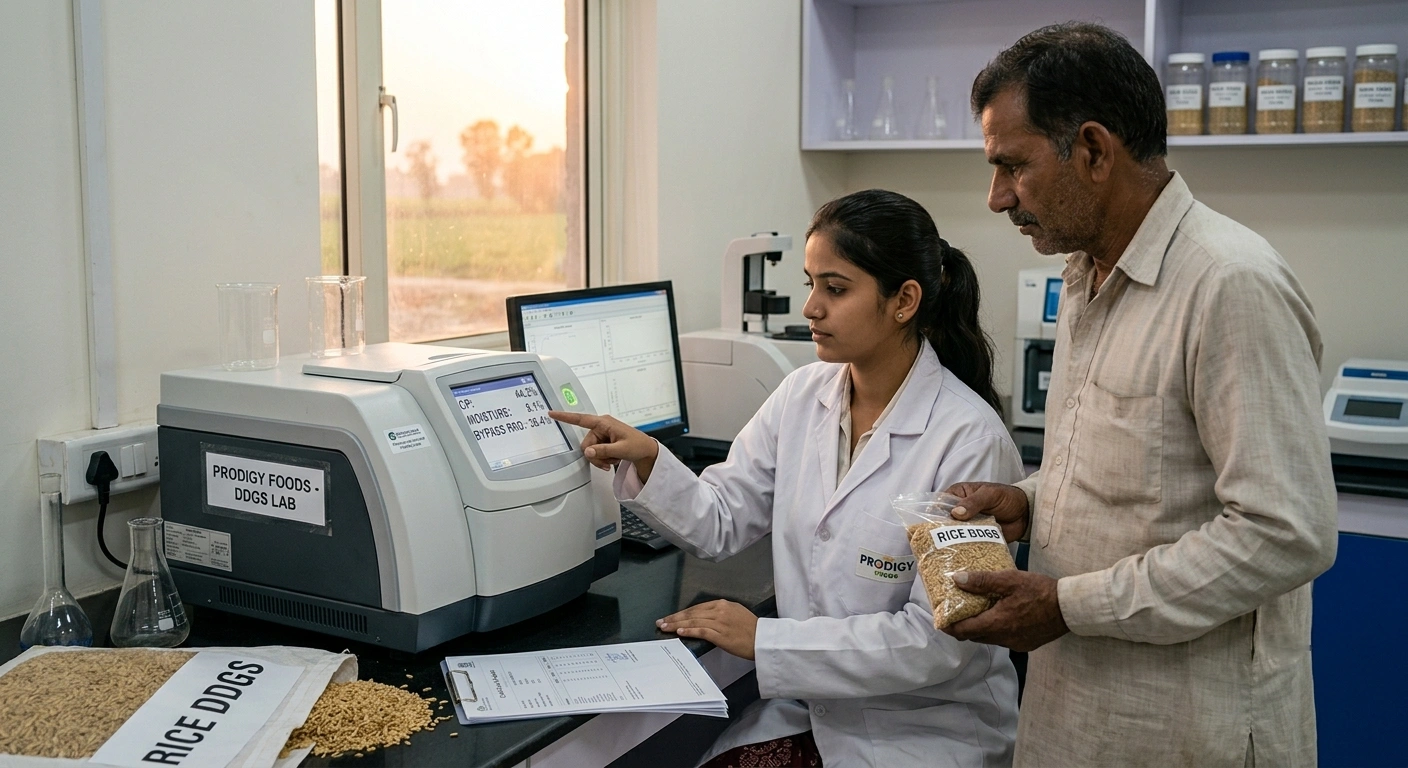
Verify quality with a COA: A demand surge for DDGS and alternative protein sourcesis leading to opportunities for low quality or moisture heavy product to enter the market. Always request a batch specific Certificate of Analysis which covers protein, moisture, energy and mycotoxin values before the first order.
Looking for laboratory tested alternatives to soybean meal? Prodigy Foods supplies Rice DDGS, Corn DDGS, Maize Gluten, Guar Korma, Roasted Guar Korma and Rice Gluten Meal with batch wise COAs on every order. Request specifications →
Conclusion
Rising soybean prices are pushing farmers toward alternative protein sources at a moment when the alternatives really are strong. Rice DDGS, Corn DDGS, Maize Gluten, Guar Korma and Rice Gluten Meal are not any stopgap solutions. They are real nutritionally validated and domestically available alternative protein feed ingredients. Indian feed manufacturers should have been using them at higher inclusion rates long before this crisis even forced the issue.
Feed manufacturers and livestock farmers who can manage this transition will do well. They can come out with more resilient formulations and lower long term input costs in the future. Their focus is on recalculated rations, verified ingredients along with a proper transition process. Those who simply just grab the cheapest available substitute have to absorb the losses at the animal level.
Prodigy Foods supplies Rice DDGS, Corn DDGS, Rice Gluten Meal, Maize Gluten, Guar Korma, Roasted Guar Korma and Maize Fiber with laboratory verified quality data on every dispatch. Contact Prodigy Foods at +91 98763 28135 or info@prodigyfoods.in.
Frequently Asked Questions: Soybean Meal Alternatives for Livestock Feed in India
Q1. Why have soybean meal prices risen so fast in India in 2026?
The soybean kharif crop of India 2025 to 26 came in at approximately 12.7 million tonnes. This is a 17% decline from the previous year. The reason behind this is the erratic monsoon weather and reduced acreage. The CLFMA confirmed that prices surged over 40% in weeks to ₹65 to 66 per kg which is the highest level in four years. The restrictions of the country on GM soybean imports have limited the country’s ability to buffer these domestic shocks through imports. This makes the price impact faster and sharper than in countries with open import policies.
Q2. What is the best soybean meal alternative for cattle and dairy feed in India?
Rice DDGS is right now the strongest direct soybean meal alternative for cattle feed in India. It has about 44 to 45% crude protein and a high bypass protein fraction which directly supports milk synthesis in lactating dairy cows. Guar Korma has 46% CP and is another strong domestically sourced option. This is particularly seen across Punjab, Haryana and Rajasthan. Combining Rice DDGS with Rice Gluten Meal is what covers both the protein quantity and bypass protein quality that is required in high yield dairy rations.
Q3. Can DDGS fully replace soybean meal in a livestock ration?
No, not at a ratio of one to one since there are differences in the composition of these two feeds. Nevertheless, rice DDGS containing 44 to 45% crude protein can partially replace soybean meal in cattle, poultry and aqua rations if the ration is recalculated to compensate for the difference in composition. It is best advised by most nutritionists to start with substituting 30 to 50% soybean meal inclusion by DDGS.
Q4. How quickly can I switch from soybean meal to alternative proteins without affecting livestock production?
A process of two to three weeks is suggested. For the first week, substitute about 25 to 30 percent of soybean meal with your new feed ingredient. The second week should see 50 to 60 percent substitution. Go 100% in the third week. This gives enough time for the rumen microbiota of cattle and poultry gut microbiota to acclimate to the changes without limiting intake or causing digestion issues.
Q5. Which alternative protein source is the most cost effective for livestock feed in India?
There isn’t a single answer for every ration. But Rice DDGS and Guar Korma are widely considered among the most cost effective alternatives to soybean meal. This is because they mix high crude protein levels with reliable domestic availability. Corn DDGS can also reduce overall feed costs by supplying both energy and protein. The best choice depends on your livestock species, nutritional requirements, ingredient prices and feed formulation.