
 Get a quote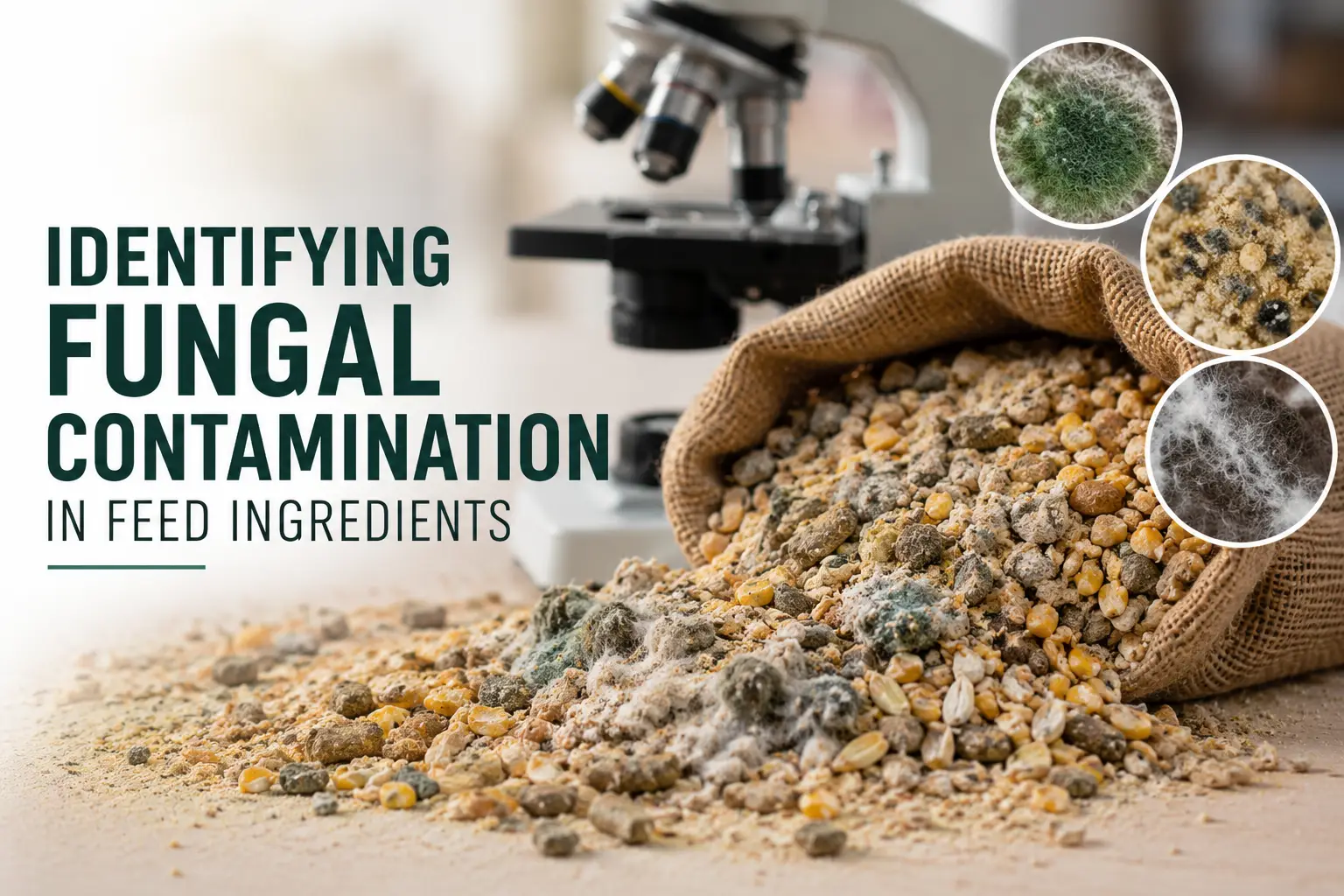
Identifying Fungal Contamination In Feed Ingredients
21 May 2026 - Admin
Feed quality has an important influence on the efficiency of livestock production, poultry performance, and overall animal health. In the case of India, where there has been rapid development in the feed manufacturing industry, the issue of fungi and mycotoxins present in feed material is one of the major worries. This is due to the humid weather conditions prevailing in India.
At Prodigy Foods, we are aware of the significance of safe and quality feed ingredients that play an essential role in the success of feed mills, poultry farms, dairies, and livestock farms in India. Identifying fungal contamination in feed ingredients early will help avoid nutrient loss, ensure safety of the animals and increase the effectiveness of the feed.
Below, we have explained ways of identifying fungi in feed ingredients, signs of fungi, types of ingredients at high risk, prevention, and importance of feed safety in India.
Feed Contamination Statistics In India
Fungal contamination and the presence of mycotoxins constitute one of the most prevalent problems in India’s feed industry. Some of the research findings on the subject matter include:
- According to FAO, about 25% of the world’s feed and food crops are contaminated by mycotoxins on annual basis.
- An Indian study conducted by ICAR revealed that aflatoxin levels were high in the ingredients used for poultry feeds, including maize and groundnut cake.
- A worldwide analysis conducted on 74,000 feed samples showed that 88% were infected with mycotoxins.
What Is Fungal Contamination in Feed Ingredients?
Fungi may contaminate feed ingredients while growing on them as a result of harvesting, storage, processing, or transporting. Some fungi create mycotoxins, which are dangerous poisons that greatly affect animal health.
The common types of fungi present in feed raw materials in India include:
| Fungus Type | Common Feed Ingredients Affected | Major Mycotoxins |
| Aspergillus | Maize, groundnut cake, rice bran | Aflatoxins |
| Fusarium | Corn, wheat and barley | DON, fumonisins |
| Penicillium | Stored grains | Ochratoxins |
| Claviceps | Cereals and grasses | Ergot alkaloids |
Fungi like these thrive in high humidity and poor storage conditions which are very commonly seen during Indian monsoons.
Common Signs of Fungal Contamination in Feed Ingredients
Appearance of Mold
One way in which you can tell that there has been fungal infection in feed ingredients is through appearance of mold. There may be:
- Green spots
- Whitish cottony appearance
- Black spots
- Yellowing of ingredients
This is mostly seen in cases where maize and oil cakes have been kept under wet condition.
Dampness or Rancid Odor
Sometimes the feed can acquire the damp or musty odor owing to fungal contamination. In such cases, the odor becomes a definite symptom of spoilage or mycotoxin production.
Clumping or Increased Moisture Levels
Fungus-contaminated feed ingredients tend to clump or stick together due to increased moisture levels.
At Prodigy Foods, for example, maintaining the required moisture balance has been identified as one of the main priorities regarding feed ingredients quality.
Feed Ingredient Discoloration
Apart from that, another prominent sign that indicates the presence of fungi is discoloration, where feed ingredients may look dark, dull, or unevenly colored than the normal one.
Decline in Nutritive Value
Fungi use nutrients in feed ingredients as their sources of food; thus, they reduce the nutrient level in feeds such as proteins and energy.
Why Fungal Contamination is a Serious Issue in India
There are some environmental factors in India that lead to the formation of fungi in feeds. Moisture, heat, and poor facilities for storing create an ideal situation for mold growth.
What are The Major Impacts of Fungal Contamination?
- Decreased productivity in poultry farming
- Unproductive use of feeds
- Hepatitis in livestock
- Weakened immune system
- More disease occurrence
- Losses for feed production companies
FAO states that mycotoxins contamination may affect the food chain indirectly by affecting milk, eggs, and meat products.
High-Risk Feed Ingredients for Fungal Growth
Some of the common feed materials susceptible to fungal contamination in India include:
- Maize
- Groundnut cake
- Cottonseed cake
- Rice bran
- Wheat bran
- Sorghum
- Soybean meal
It has been established by Indian researchers that feed materials containing maize contain high amounts of aflatoxin contamination.
How to Prevent Fungal Contamination in Feed Ingredients?
Maintain Proper Storage Conditions
Feeds must always be kept in:
- Dry storage facilities
- Ventilated spaces
- Water-tight storage units
- Sanitized environments
Monitor Moisture Levels
Moisture level is what causes fungi infection in the first place. If the moisture levels are kept within safety limits, then chances of infections are greatly reduced.
Feed Testing
Regular feed testing will help to determine mycotoxin infection even before feeding to livestock.
Methods used include:
- ELISA testing
- HPLC analysis
- Mycotoxin testing kits
Follow FIFO Inventory Management
Following the FIFO inventory system reduces chances of prolonged storage and spoilage.
Source Quality Feed Ingredients
Dealing with dependable sources provides feed ingredients which are safer and of better quality.
In the case of Prodigy Foods, safety standards of their feed ingredients can be ensured by means of proper quality control and handling techniques.
Importance of Feed Safety and Quality Assurance
As the poultry and livestock industry of India expands, feed safety has gained significance like never before. The buyers now look for those suppliers who have an inclination towards:
- Feed quality assurance
- Feed safety
- Testing of mycotoxins
- Safe storage of feed
- Reliable sourcing
You can not only protects animal health but also improves profitability by investing in feed quality control. This also offers long-term business sustainability.
Conclusion
Fungal contamination identification is important in terms of feeding material quality assurance, ensuring animal safety and enhancing performance levels in India’s feed industry. Proper moisture management, testing of materials for mold contamination and appropriate hygiene will greatly contribute to decreasing contamination risk.
At Prodigy Foods, we understand the importance of providing good quality feed materials. This is key in supporting Indian’s livestock sector which includes poultry and dairy production. Effective quality control measures will guarantee increased feed efficacy and performance levels.
Frequently Asked Questions (FAQs)
What causes fungal contamination in feed ingredients?
The causes of fungal infection include high moisture content, improper storage, humidity, and incorrect handling during storage and transport.
What are the feed ingredients susceptible to fungal infection in India?
Some of the feed ingredients that are more vulnerable to fungal infections in India include maize, groundnut cake, rice bran, cottonseed cake, and wheat bran.
Why are mycotoxins dangerous in animal feed?
They may lead to reduced immunity in animals, organ damage, decreased productivity, and lower the quality of meat, milk, and eggs.
How do feed manufacturers avoid fungal contamination?
Feed manufactures can avoid contamination through moisture management, adequate storage, proper testing, hygiene warehouses, and quality source management.
How does one detect fungal contamination in feed ingredients?
It can be detected through visual assessment, odour assessment, moisture determination, and lab-based techniques such as ELISA and HPLC analysis.