
 Get a quote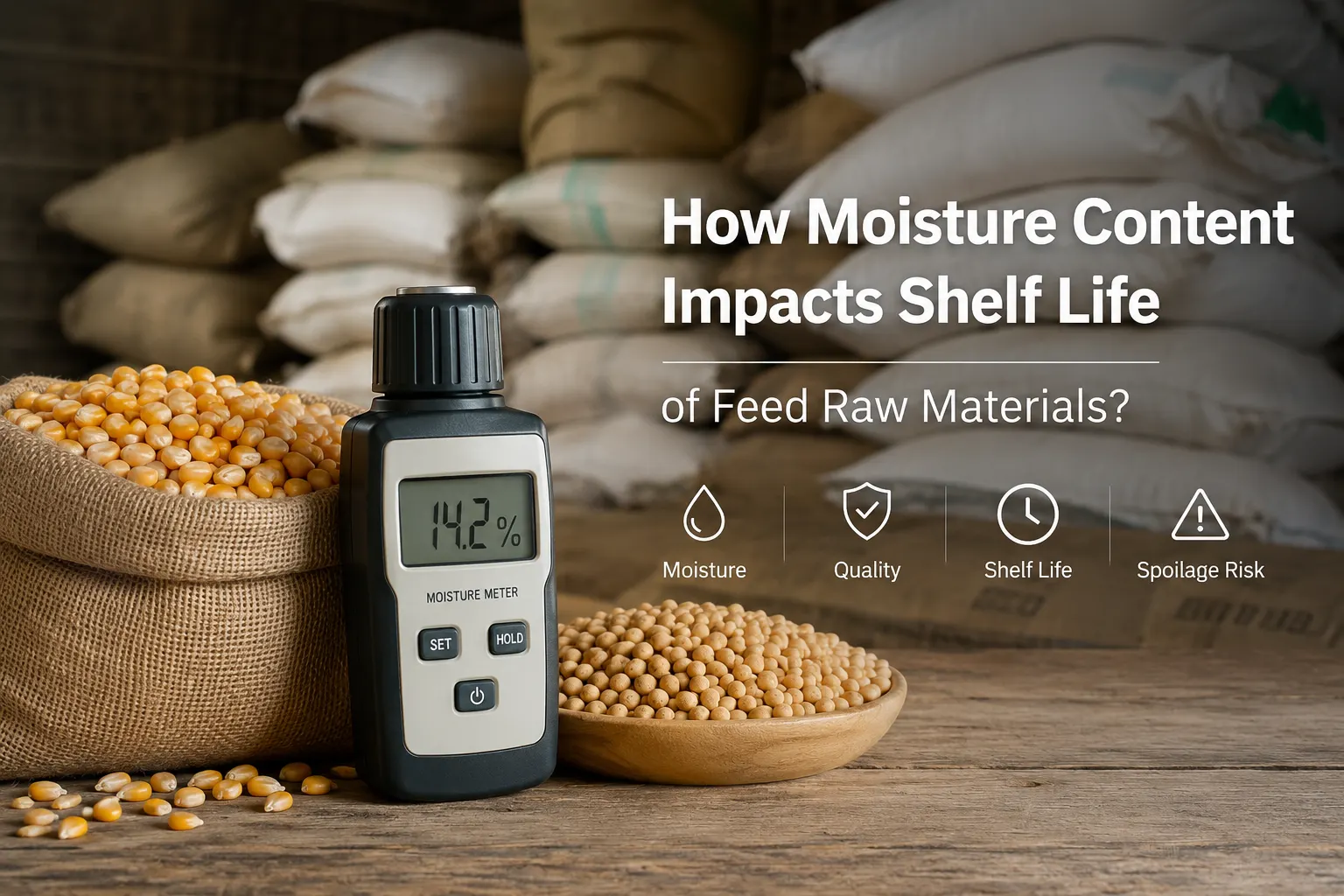
How Moisture Content Impacts Shelf Life of Feed Raw Materials?
7 May 2026 - Admin
Feed raw material quality becomes one of the important elements in the animal feed industry in India. The scarcity of certain nutrients and ingredients of complete feed will have an impact on the production level of livestock, which will later affect its profitability. Another important point that needs to be kept in mind is the moisture level in feed ingredients.
The Indian monsoon season can deliver high humidity levels, while summer temperatures can be scorching. So managing moisture levels in feed is difficult as much as it is necessary. When damage occurs, even a small imbalance in sulphur level may damage the soil. In this blog, we help you understand how moisture content impacts the shelf life of feed raw materials.
Statistical Data on Moisture Levels & Shelf-Life of Feeds
According to FAO:
-
- Grain shelf-life and spoilage are influenced by moisture and temperature
- The higher the moisture content, the faster the rate of microbial activity and insect infestation
- The maximum safe moisture content for storing grains is 12%-13% in hot areas
- The higher the moisture content, the shorter the storage period
What Is Moisture Content of the Feeding Materials?
The moisture content of feed materials includes the proportion of water found in feed materials such as maize, soybean cake, rice bran, and complete compound feed.
Some of its importance in determining is:
- Stability of the feed when it is stored
- Nutrient integrity
- The chances of being contaminated by microorganisms
- Quality of the feed
A proper moisture balance is a must because this is how your feed stays safe, effective and also suitable for long term storage.
How Does Moisture Content Affects Shelf Life of Feed Raw Materials?
Higher Chance of Fungi and Mycotoxins
High levels of moisture cause a favorable atmosphere for the proliferation of fungi, which may result in the development of mycotoxins, poisonous elements that adversely affect animal health.
This problem is one of the greatest concerns when it comes to inadequate storage of feeds in India.
Nutrient Deterioration With Time
Moisture facilitates chemical processes that result in nutrient deterioration in terms of proteins, fats, and other vitamins.
These result in:
- Decreased feed efficiency
- Poor animal performance
- Higher feeding costs
Physical Degradation of Feed
Moisture imbalance also causes physical degradation in the feed:
- Excess moisture causes caking and odour
- Low moisture causes dryness
- Both situations lower the consumption of the feed, making it harder to handle.
Reduced Storage Life and Market Value
In Indian conditions, it’s very much possible that if any feed has a moisture level above 14 to 15%, it can spoil fast. This is especially the case in warm and humid environments.
This results in:
- Shorter shelf life
- Increased rejection rates
- Financial losses
What Are The Moisture Challenges In Indian Conditions?
The climate of India is very diverse in the way it shoes unique challenges all involving feed shelf life management.
Monsoon Season
With high humidity, feed materials absorb moisture more. This basically increases the risk of fungal contamination.
Summer Season
With high temperatures, you see moisture evaporation. This is what causes weight loss as well as product value.
Storage Infrastructure Issues
Condensation and uneven moisture distribution are some big issues which come out with poor ventilation and bad storage systems.
What Are The Ideal Moisture Levels for Different Feed Materials?
It’s very essential to maintain optimal moisture level if you want to extend the shelf life.
| Feed Material | Recommended Moisture |
| Maize & Grains | 10 to 12% |
| Oilseed Meals | 10 to 12% |
| Compound Feed | 11 to 13% |
| High-Moisture Feed | Below 15% (short-term use) |
These levels are what help maintain animal feed quality in India and also prevents spoilage.
The Hidden Cost of Poor Moisture Control
Profitblity is affected a lot more than you may have imagined when it comes to moisture mismanagement.
Shrinkage Losses: Less weight which leads to lower revenue
Spoilage Losses: Damaged feed which becomes unusable
Processing Costs: Extra drying or treatment is needed
Customer Dissatisfaction: Trust is affected with Inconsistent quality affects
You can face some big financial issues over time even if there are just minor changes in moisture content.
What Are The Best Practices for Moisture Control in Feed Raw Materials?
These practices are very important if you want to ensure effective moisture control in feed ingredients:
Proper Drying Before Storage
You have to ensure that the raw materials are dried so as to ensure safe moisture levels right after procurement.
Regular Moisture Monitoring
Use moisture meters so that you can track levels during storage and processing.
Scientific Storage Systems
Avoid direct floor contact
Prevent water exposure
Use of Mold Inhibitors
You can prevent fungal growth and also extend shelf life with preservatives.
FIFO (First-In, First-Out)
This is how you reduce the storage time and also minimise spoilage risk.
Protective Packaging
You can maintain feed quality during transportation by just using packaging that’s moisture-resistant.
Why Has Moisture Management Become More Important than Ever Before?
With the rising demands for quality animal feeds in India, it has become necessary to ensure consistency.
The buyers will look for:
- Safe and uncontaminated feed
- Consistent nutritional content
- Extended shelf-life
Moisture management in the feed materials will help achieve all of this.
Feed Consistency in Moisture Levels
The right moisture level can be attained through:
- Science-based storage techniques
- Continuous monitoring for quality
- Control of sources
- Consideration of the environment
This philosophy is adopted by Prodigy Foods in all its procedures in order to maintain consistency in quality despite the harsh conditions in India.
Conclusion
The content of moisture becomes very important in determining the storage life of raw materials used in feeds. Due to India’s changing climatic conditions, the management of moisture becomes crucial for avoiding spoilage, keeping nutrition value intact, and remaining profitable. It is possible to improve feed production by understanding how moisture content impacts shelf life of feed raw materials.
Frequently Asked Questions
Q – What should be the moisture level in feed raw material?
A – The desired moisture level lies between 11%-13% and depends upon the nature of feed.
Q – How does moisture affect the storage period of feeds?
A – Moisture causes feed to go bad due to molds and nutritional value loss, thus reducing its shelf life.
Q – How do moisture level affect feeds in India?
A – Being a humid country, moisture poses higher chances of feed going bad for India.
Q – Why is moisture harmful for feed?
A – Moisture results in feed being contaminated with fungi and mycotoxins.
Q – How to control moisture level in feeds?
A – Controlled by drying, storage conditions, regular monitoring, and preservatives.
Q – What are the side effects of moisture which is uncontrolled?
A – This can lead to losses in manufacturing along with increased costs.
Q – How can one maintain feed quality?
A – You can maintain feed quality by maintaining moisture levels and quality standards during the processing along with the storage.