
 Get a quote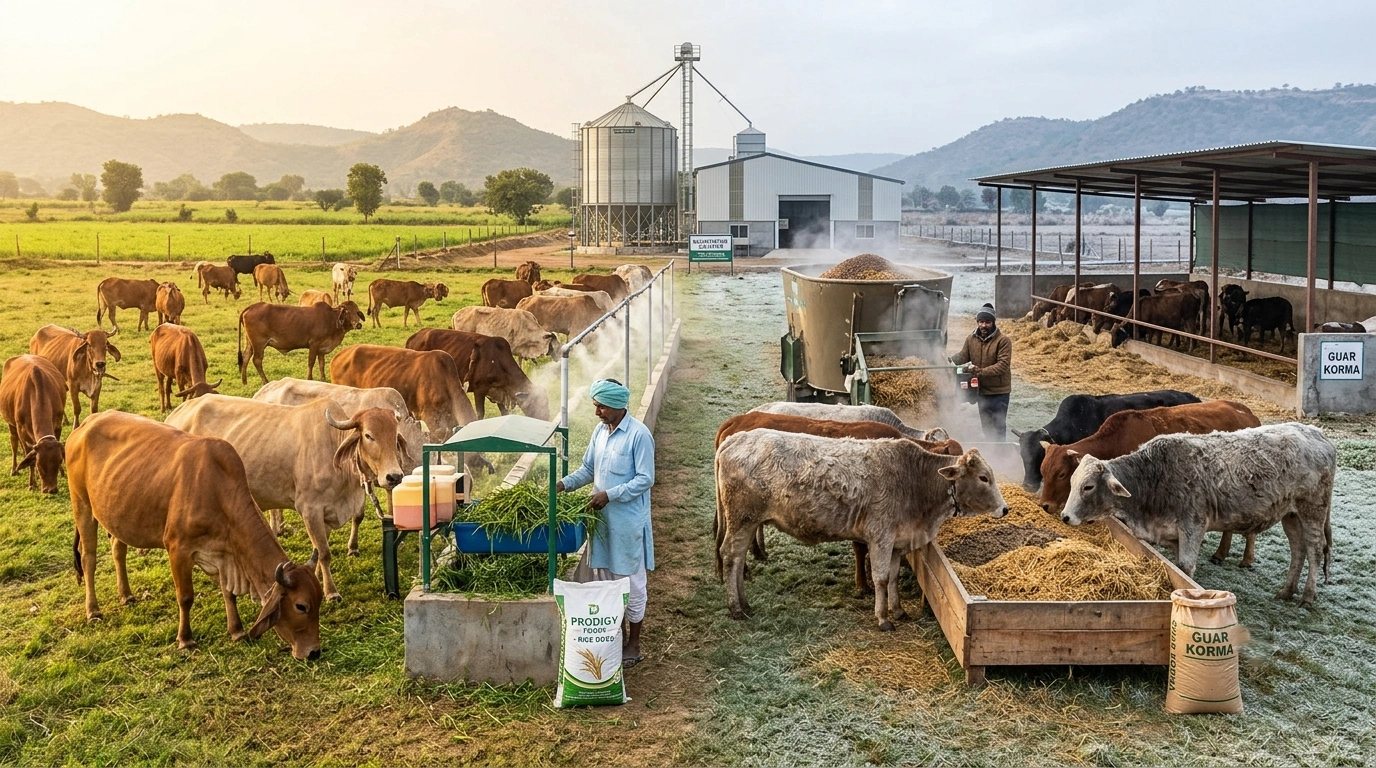
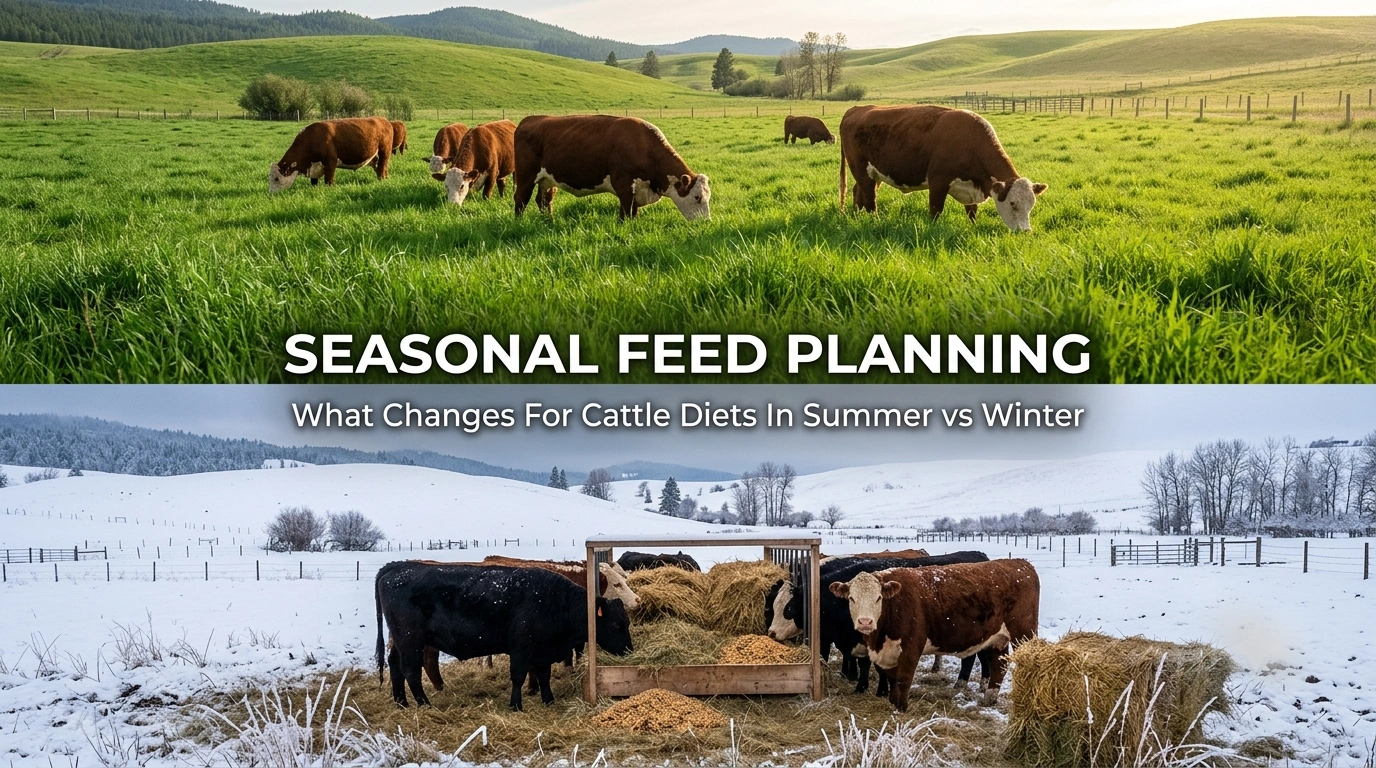
Seasonal Feed Planning: What Changes For Cattle Diets In Summer vs Winter
14 Jul 2026 - Admin
Livestock productivity isn’t really a fixed variable. It actually rises and then falls with the season. If you’re a dairy and livestock farmer across India, then for you, the gap between a profitable year and a difficult one often comes down to one thing. Is your seasonal feed planning for cattle keeping pace with what your animals actually need?
The nutritional requirements of cattle shift vary greatly from the summer months to the cold winter months. There is variation in feed intake, energy demands, utilisation of protein and digestive system health once temperature levels reach extremes. A cattle diet in summer will not work the same during winter, and those who believe otherwise end up paying the price with poor milk production, weight gain and higher veterinary costs.
At Prodigy Foods, we supply some of the highest quality cattle feed raw materials. These include Rice DDGS, Corn DDGS, Rice Gluten Meal, Maize Gluten, Guar Korma and Roasted Guar Korma. Choose us if you’re a feed manufacturer and livestock farmer who wants consistent, nutrition driven results across every season. This guide fives into what changes for cattel diets in summer vs winter and a seasonal feed planning.
The Numbers Behind Seasonal Feed Losses
Before you change your feed plan, realise the magnitude of what is at stake:
According to LAEX/Climate Stress in Dairy, 2026
- There are losses of 5% to 12% of milk production due to heat stress among Indian dairy herds during the hot season. In extreme cases, losses go up to 20%-30% in lactating cattle.
- For cattle, the THI threshold in heat stress is greater than 72. The combination of temperatures higher than 38°C together with humidity higher than 70% has significant effects in reducing feed consumption, reproduction and milk production.
It was found by an ICAR-IGFRI study in 2022 that rising temperatures would cause a reduction in milk production in northern India plains by 361,000 tonnes by 2039, which is estimated to be around ₹1,193 crores worth. (Business Standard, May 2026)
During the cold weather, there is an increase in energy needs due to cattle thermoregulation activities.
Seasonal Feed Planning for Cattle: What Changes in Summer?
Lower Intake Demands Higher Nutrient Density
A drop in the dry matter intake is the most documented summer effect here. Cattle eat less but their protein and energy requirements do not fall proportionally which leads to a nutrient deficit. The simple solution is a cattle diet in summer that is capable of delivering more nutrition per kilogram.
This is where Rice DDGS is becoming essential. It is actually one of the most nutrient-dense byproduct feed ingredients that are available in India. This is because of its 44 to 45% of crude protein and an energy value of 3,100 to 3,300 Kcal/kg. With a higher inclusion in the concentrate ration, you can compensate for the lower intake volume all while needing the animal to eat more bulk.
Maize Gluten has about 60% of crude protein, which makes it the highest protein single ingredient in the Prodigy Foods range. With a small inclusion, you can go a long way towards meeting crude protein targets when your appetite is suppressed by heat.
Bypass Protein Supports Milk Production Under Heat Stress
Heat stress is known to increase your protein catabolism which is the breakdown of the muscle protein for energy. You can address both the quantity and digestibility when meeting the crude protein requirements for cattle in summer. Rice gluten meal, with its 40 to 45% crude protein and rumen undegradable protein franction are important here. They directly support the milk synthesis which is in lactating cows even then your total intake is lower.
Manage Fibre to Reduce Rumen Heat Load
Heat production takes place during the process of fibre fermentation. In the summer season, by substituting a small proportion of high NDF forage with Corn DDGS that contains around 30% crude protein and less than 7% of fibre, the heat load can be lowered. This still contributes well to the protein and digestible energy to the ration.
Replenish Minerals Lost Through Sweating
Due to sweating and breathing in summer, cattles lose sodium, potassium and chloride. Although phosphorus in DDGS is available naturally (0.43 to 0.83%), supplementation of electrolytes along with the concentrate ration is suggested between April-June in North India.
What Changes in Cattle Feed in Winter?
Higher Energy Demand for Thermoregulation
In the winter months, cows have their metabolism geared towards thermoregulation needs. For maintenance of the same levels of milk and body condition in the winter as the rest of the year, the winter cow’s ration should be higher in terms of energy content.
The Guar Korma (46% crude protein, 2,800-3,000 Kcal/kg) and Roasted Guar Korma (crude protein > 55%, no trypsin inhibitors) are both very good ingredients for winter rations. Increased digestibility of amino acids in Roasted Guar Korma due to heat treatment occurs at just the right time. This makes nutrients more bioavailable especially when energy demands are elevated.
Maize Fiber contributes fermentable fibre which generates rumen heat. This is a benefit in cold conditions unlike summer. The 18 to 20% of protein really adds to the ration without loading any excess crude protein at a time when energy is the primary limiting factor.
Higher Voluntary Intake — Use It Strategically
Cattle in cool conditions very voluntarily eats more. This higher appetite window is actually the right time to build a body condition which reserves for the breeding season and the heat months ahead. Including Corn DDGS at higher rates in winter concentrates adds fermentable energy and protein all while maintaining a good rumen function.
Prioritise Digestibility When Water Intake Falls
The cattle consume less water in the winter season. Reduced consumption of water causes the slowing down of rumen movement and decreased digestion efficiency. The highly digestible sources such as rice DDGS and rice gluten meal maintain their nutrient content even in case of slowed down rumen movement. This makes thems reliable components of a winter cattle feed plan.
Summer vs Winter Cattle Feed: Quick Comparison
| Parameter | Summer | Winter |
| Dry Matter Intake | Lower – increase nutrient density | Higher – build body condition |
| Key Protein Sources | Rice DDGS, Rice Gluten and Maize Gluten | Guar Korma, Roasted Guar Korma and Corn DDGS |
| Fibre Strategy | Reduce high-NDF roughage; limit rumen heat | Include Maize Fiber for rumen warmth |
| Energy Adjustment | Concentrate energy in smaller volume | Raise total energy to offset thermoregulation |
| Mineral Focus | Electrolytes (Na, K, Cl) | Phosphorus and calcium |
Conclusion
Effective seasonal feed planning for cattle is among the most impactful decisions a livestock farmer or feed manufacturer can make. During summer, there is a need for feeds that are rich in nutrients, have low heat load, and contain high-bypass protein such as Rice DDGS, Rice Gluten Meal and Maize Gluten. During winter, there is a need for feeds that are high on total energy, fibre content, and those that will ensure rumen heat. This is when Guar Korma, Roasted Guar Korma and Maize Fiber work best.
The quality of the raw materials determines how the seasonal adjustments will be met successfully. All essential cattle feed raw materials are supplied at Prodigy Foods with our laboratory-verified protein, moisture and energy values. We give consistency to feed manufacturers and livestock farmers to reformulate with confidence, season after season.
Contact Prodigy Foods: prodigyfoods.in/contact-us | +91-98763 28135 | info@prodigyfoods.in
Frequently Asked Questions on Seasonal Feed Planning for Cattle
Q1. Why is seasonal feed planning for cattle important in India?
The climate swings in India are seen between extreme summers and cold winters. The THI in summers exceed 72 in North India. Both of these seasons alter the cattle energy requirements, feed intake an milk yield. Farmers have a risk of significant milk yield losses without a season specific feed plan.
Q2. What are the best cattle feed ingredients for summer?
Rice DDGS (44 to 45% crude protein) and Rice Gluten Meal (40 to 45% crude protein) are the most effective summer ingredients. This is because they deliver high bypass protein and energy in low volumes.
Q3. Which feed raw materials are most effective for cattle in winter?
Guar Korma with its 46% CP and Roasted Guar Korma with a 55%+ CP are perfect for winter rations. They offer dense protein and the right energy to offset thermoregulation costs.
Q4. Can DDGS be used in cattle feed year-round?
Yes, Rice DDGS and Corn DDGS are effective to be used across all seasons but they serve different roles. Rice DDGS is prioritised in summer because of its nutrient density and bypass protein. And in winter, Corn DDGS is included at higher rates for its fermented energy contribution as well as cost effectiveness.
Q5. Where can I source quality cattle feed raw materials for seasonal ration formulation?
Prodigy Foods is a trusted manufacturer as well as a supplier of Rice DDGS, Corn DDGS, Rice Gluten Meal, Maize Gluten, Guar Korma, Roasted Guar Korma and Maize Fiber. These are all laboratory tested before dispatch.