
 Get a quote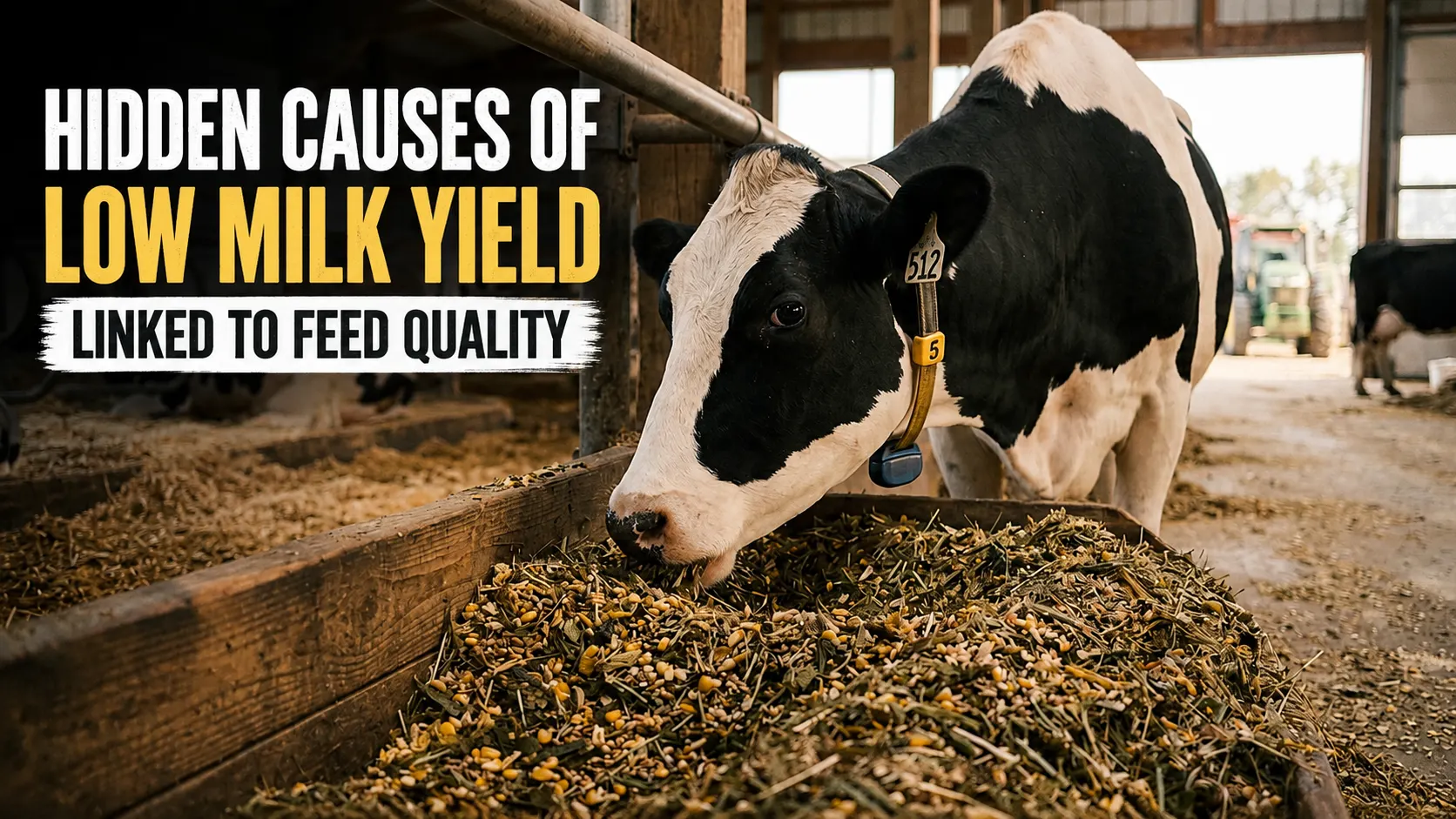
Hidden Causes Of Low Milk Yield Linked To Feed Quality
15 May 2026 - Admin
India is the highest producer of milk in the world. However, there is one problem that most dairy farmers in India encounter when it comes to rearing their cattle, which is producing low quantities of milk. Even though the factors usually pointed at are genetic problems, diseases, or poor farming practices, most dairy farmers ignore one underlying problem: low-quality feed.
At Prodigy Foods, we know how important good cattle nutrition is for efficient dairy farming. Dairy productivity is very much affected by cattle feed, proper nutrition, and scientifically managed fodder practices. This is the reason why our main focus in this blog is to reveal hidden causes of low milk yield linked to feed quality and help dairy farmers from India combat those problems.
India’s Dairy Industry: Key Statistics
India remains the top country when it comes to the production of milk globally, and this is made possible by the huge number of dairy farmers in the country. According to statistics from the National Dairy Development Board (NDDB), the production of milk has been steadily increasing in India over the years. NDDB further states that feed and fodder comprise almost 70 to 75 percent of the total expenditure in dairy farming operations, thus making their quality the most important determinant of milk productivity and economic viability of farms.
Why Does Feed Quality Directly Impact Milk Yield?
Milk production depends very heavily on the nutrients which are available to dairy animals. In this case, cows or buffaloes need the right amount of protein, energy, minerals, fiber, and vitamins for optimal lactation. Poor quality feed makes this difficult.
Low-quality feed for cows/buffaloes may cause:
- Lower milk volume
- Fat content reduction in milk
- Intestinal diseases
- Compromised immunity system
- Infertility
- Decrease of weight of dairy cattle
In India, farmers use poor-quality or nutrition-unbalanced feeds/fodder without knowing its consequences.
What Are The Hidden Causes Of Low Milk Yield Linked To Feed Quality?
Poor Nutrition in Dairy Animals’ Diet
The most prominent hidden cause behind low milk production is poor nutrition in the diet of dairy animals. Most farmers tend to ensure that the animal’s appetite is fulfilled, without considering their nutritional needs.
An ideal diet of a dairy animal comprises:
- Green fodder
- Dry fodder
- Protein concentrate feed
- Mixture of minerals
- Fresh water
As per NDDB Animal Nutrition norms, balanced feeding contributes significantly towards improving milk production and overall health of the cattle.
In case dairy animals are deprived of proteins or energy sources, milk production becomes poor.
Low Quality Fodder
In India, the quality of fodder is sometimes inconsistent due to shortage of supply during certain seasons, improper storage, and lack of awareness. Moldy, dry, and deficient fodders affect the feed intake and digestion process.
The main issues related to fodder are:
- Low digestibility
- Mold formation
- Low nutritional value
- High fiber and low protein
Feeding poor-quality fodder to animals regularly affects their milk production.
Mineral Deficiencies in Dairy Cattle
Hidden mineral deficiencies are very common on Indian dairy farms. Minerals like calcium, phosphorus, magnesium, zinc, and trace minerals are required for milk formation.
The symptoms of mineral deficiency are:
- Decreased milk production
- Brittle bones
- Reproductive inefficiencies
- Loss of appetite
- Weak immune system
NDDB stresses the need for mineral supplements and feeding programs in improving dairy cattle production in India.
Inconsistency in Feeding Schedule
Most dairy farmers underrate the significance of the feeding schedule. An irregular feeding schedule disturbs the process of rumination and affects nutrient absorption.
To increase milk productivity:
- Provide dairy cattle with food on a consistent schedule
- Keep feed amounts constant
- Do not change feeds abruptly
- Ensure consistent supply of clean water
Low Protein Consumption
Proteins form the basis for milk production. When there is low protein content in the feed, milk production becomes poor.
The causes of low protein content may include:
- Heavy reliance on dry feed
- Low-quality concentrate feed
Optimized protein nutrition actually positively affects milk yield along with dairy economics.
Low Feed Digestion Efficiency
If the feed seems adequate in quantity, inefficient digestion means improper nutrients assimilation.
Reasons for low efficiency of digestion are:
- Matured feeds
- Presence of lignin
- Improper feed handling
- Proper silage fermentation process
High quality and digestible feeds help in effective assimilation and increase milk production.
Contaminated Or Adulterated Feed
Substandard cattle feed is becoming a big concern in India right now. If we look at some reports, then it becomes clear about the sale of poor-quality compounded cattle feed. This is being done without proper quality certification.
Contaminated feed may contain:
- Harmful toxins
- Excess moisture
- Fungal growth
- Low-grade ingredients
Feeds like these can negatively affect animal health, reproduction along with milk quality.
How Can Indian Dairy Farmers Improve Milk Yield?
Use Balanced Cattle Feed
Balanced cattle feed offers you correct ratio of carbohydrates, proteins, minerals and vitamins which are needed for milk production.
Farmers need to choose only scientifically formulated feed from trusted manufactures like Prodigy Foods if they want to ensure consistent nutrition.
Focus On Green Fodder Cultivation
Green fodder is what improves digestion, enhances milk fat content and also supports animal health. Proper fodder crops in India are these:
- Maize
- Napier grass
- Berseem
- Sorghum
Add Mineral Mixture Regularly
You can prevent hidden deficiencies with mineral supplementation about reducing milk yield as well as fertility.
Practice Ration Balancing
Ration balancing ensures that dairy animals get nutrients according to their age, body weight and lactation stage.
Ensure Clean Drinking Water
Milk production is very directly affected by water intake. So dairy animals of high milk volumes need large quantities of clean water every day.
Role Of High-Quality Feed In Sustainable Dairy Farming
The dairy industry in India is changing fast, and the quality of feed has now become an essential aspect of sustainable dairy farming. Nutritional needs of animals are not only responsible for increased milk production but also for:
- Improved reproduction
- Increased immunity
- Better milk quality
- Sustainable dairy farming
As the cost of feed keeps rising in India, proper feeding becomes essential for dairy farmers.
Conclusion
Poor milk production may not be attributed to just one problem. On many dairy farms in India, poor quality of feed is the major cause of inefficiency on these dairy farms. Fodder of poor quality, mineral deficiency, protein imbalance, and contamination of feed can greatly affect the productivity of dairy animals. This blog discussed the hidden causes of low milk yield linked to feed quality.
Through the application of balanced feed and using reliable cattle feed products offered by Prodigy Foods, dairy producers can enhance milk production and increase profits. Buying cattle feeds should never be considered as expenditure but an investment.
FAQs on Low Milk Production And Feed Quality
Q – What is the main cause of low milk production by dairy cows in India?
A – Low milk production is very commonly caused by poor quality feed, improper nutrition, mineral deficiencies and lack of proper protein content in Indian dairies.
Q – How does quality feed play a role in milk production?
A – Quality feed ensures proper nutritional values that help in milk production as well as digestion of the feed.
Q – Which feed should be provided to dairy cows to increase their milk production?
A – A balanced diet of cattle feed with proper protein, minerals, and vitamins should be used to enhance milk production in dairy cows.
Q – Can mineral deficiency affect milk production?
A – Yes, since mineral deficiencies like calcium, phosphorus, magnesium, and trace minerals can lead to low milk production, decreased fertility, and immunity of the animal.
Q – How do you increase natural milk production on a farm?
A – Milk production can be increased through balanced nutrition, regular feeding, provision of clean water, and using good quality fodder and minerals.
Q – What is the importance of ration balancing on a dairy farm?
A – Ration balancing allows proper nutrition to the dairy animal depending on its milk production stage.