
 Get a quote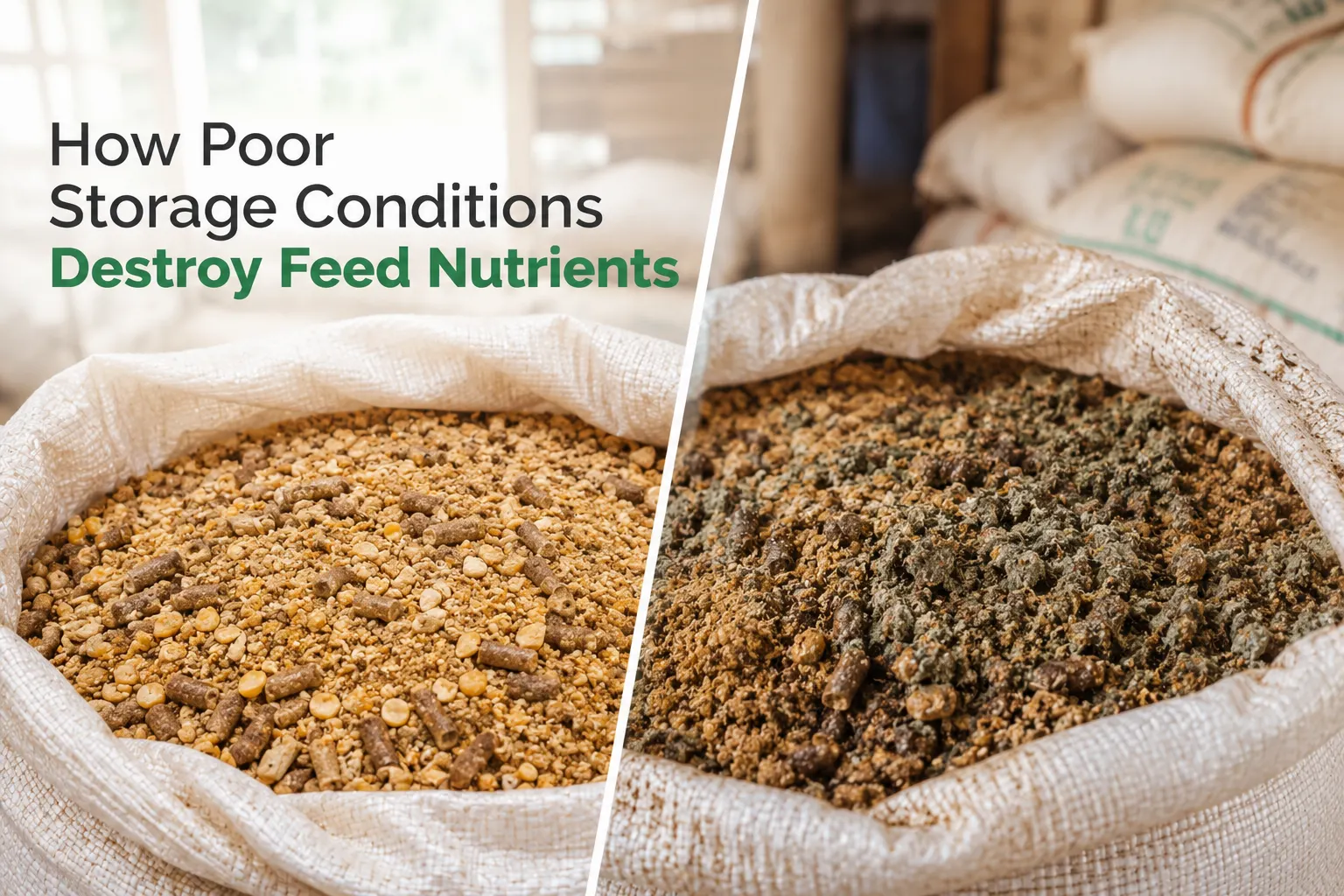
How Poor Storage Conditions Destroy Feed Nutrients
15 May 2026 - Admin
Farmers of livestock in India tend to buy high-quality feeds for cattle and poultry because of their expectations of increased milk yield and growth rate and better animal health. However, despite the quality of the feed, it will soon become useless due to poor storing conditions that destroy nutrients. In India, variations in the climate and moisture brought by monsoons have made proper storage of feed for animals very necessary. Improper storage of feeds will affect the nutrition of the feed including proteins, vitamins, fats and amino acids. This could negatively impact the health of the livestock, milk production, and income from agriculture. Fungal growth and toxic contamination may occur in extreme cases.
Understanding how poor storage conditions destroy feed nutrients is very important for farmers so that they can better storage decisions and protect livestock nutrition. As such, at Prodigy Foods, we focus heavily on feed quality and nutritional stability. These are our key focuses for modern Indian livestock farming.
Feed Storage in India: Why It Matters
Due to the climatic conditions prevailing in India, it becomes very difficult to store feeds. Too much moisture during the monsoon period results in the faster decay of the feed along with nutrient loss. Studies conducted in Indian livestock showed that the moisture content in feeds exceeding 15 percent results in fungal infection and presence of aflatoxins.
According to research from PubMed, 4,818 samples of feed were recorded where high levels of aflatoxin were found in the feed ingredients used, like groundnut cake, maize, and mixed feed.
This justifies the importance of proper storage facilities for animal feed in India today.
What Happens When Feed Is Stored Improperly?
Feed gets deteriorated in quality due to moisture accumulation, oxidation, heating, fungus growth, and pests through poor storage.
Moisture Results in Molds and Fungus Growth
Moisture is among the worst elements for feed storage in animal husbandry. Once feed starts absorbing moisture, fungi and molds start growing very fast.
Consequences of this are:
- Degradation of proteins and vitamins
- Feeding difficulty
- Odor and spoilage of the feed
- Generation of harmful mycotoxins
- Reduction of feed consumption by livestock
Indian research reveals that there is a rapid production of aflatoxins when the moisture content of the feed becomes greater than 12.5-15%.
Dairy feed becomes especially hazardous since feed may affect milk adversely.
Heat Destroys Essential Vitamins
Poor storage conditions for feeds in hot climates of India will increase nutrient oxidation. Vitamins A, D, and E are highly sensitive to heat and light exposure.
During storage of feeds in improperly ventilated sheds and open to sunlight:
- Potency of vitamins reduces quickly
- Fat oxidation is higher
- Feed quality is poor
- Nutrition composition is affected
The influence of storage environment on feed spoilage is mentioned by the FAO guidelines on feed storage.
Poultry and dairy animals will be directly affected by the loss of vitamins through immunity, milk production, fertility, and growth efficiency.
Oxidation Lowers Feed Energy Content
Oils and fatty feeds are more susceptible to deterioration when stored for extended periods of time.
When fat undergoes oxidation:
- Feed gets spoiled
- Feed energy content gets reduced
- Palatability gets impaired
- Livestock eats less
Spoiled feed produces toxins which have negative impacts on digestion and metabolism.
That is why quality livestock feed producers pay close attention to antioxidants and proper storage conditions.
Pest Contamination in Feed
Improper storage results in contamination by:
- Rodents
- Insects
- Birds
- Mites
The pests utilize the nutrients and leave behind contamination due to their waste.
According to reports from FAO, pest infestation causes not only losses of weight but also increases microbial growth and toxin levels.
In India, it is common for this problem to be further exacerbated by open warehouses and floor level storage.
Nutrients Most Affected by Poor Feed Storage
Protein
Protein degradation mostly just happens due to microbial activity as well as moisture exposure. Poor quality protein reduces animal growth as well as milk yield.
Vitamins
Vitamins A, E, and B degrade very fast due to heat and oxygen exposure.
Minerals
Humidity results in the segregation of minerals and leads to the unequal distribution of nutrients in the feed.
Fat Content
Oxidation of fat results in low energy content and rancidity.
Amino Acids
The essential amino acids are affected by moisture and high temperatures for an extended period.
Impact of Poor Feed Storage on Livestock
Low Milk Output
When dairy cows eat feeds that are spoiled or do not contain enough nutrients, their milk output becomes low.
Poor Immunity
The animals become easily attacked by pathogens due to low immunity.
Weight Gain Reduction
In cases of poor-quality feeds for chickens and cattle, the ratio of weight gain will be affected.
Reproductive Issues
Low amounts of vitamins and minerals lead to infertility problems.
Higher Costs Associated With Vets
The contamination of the feeds leads to digestive disorders and exposure to toxins.
Aflatoxins: The Hidden Threat in Indian Feed Storage
Aflatoxin contamination is actually one of the most dangerous results of poor storage conditions. Aflatoxins are toxic compounds that are produced by fungi which grows in moist feed ingredients like maize, peanuts and oil cakes.
Recent studies have established that improper cattle feed storage results in contamination of milk with aflatoxins, with a contamination rate of more than 80 percent in corn samples.
These toxins are very harmful because they:
- Reduce animal productivity
- Damage liver health
- Lower immunity
Enter the human food chain through milk and meat
This is what makes proper feed storage important both for animal as well as public health in India.
Best Practices for Proper Storage of Feeds in India
Dry Feeds Only
Maintain lower moisture content in the feeds all the time.
Raise Feeds from Ground Level
Feeds must never be kept on ground level. Use racks instead.
Provide Proper Ventilation
Proper airflow reduces humidity in storage units.
Adhere to FIFO Principle
“First In, First Out” makes sure that old feeds are used first.
Protect Feed from Sunlight
Always try to store your feed in areas that are not exposed to sunlight or heat.
Check for Mold and Odor
Frequent monitoring allows you to detect any sign of spoilage.
Quality Packaging
Strong and moisture-resistant packaging enhances shelf life.
Why Quality Feed Manufacturers Focus on Storage Stability
Leading feed manufactures understand this well that nutrition is only effective if nutrients remain stable during transportation and storage.
In the case of Prodigy Foods, quality feed production entails proper ingredient selection and nutritional stability in a manner suitable for the Indian weather.
Such practice helps livestock owners get more out of their feeds, hence higher profitability levels.
Conclusion
Improper storage of feed can result in a loss of nutrients from the feed before consumption by the animals. Since India has a humid and temperature-controlled climate, improper storage of feeds results in formation of fungi, vitamin losses, rancidity, pest contamination, and toxic contamination.
Feed preservation is highly vital for all dairy farms, poultry enterprises, and livestock farmers to ensure their productivity and profitability.
With the help of scientific storage techniques, moisture management, adequate ventilation, and superior-quality feed formulations, substantial nutrient loss and enhanced livestock performance can be easily achieved.
FAQs
Q – How do poor storage conditions affect animal feed?
A – This happens due to Poor storage conditions that expose feeds to moisture, heat, oxygen and pests. This destroys and also increases fungal contamination.
Q – What is the perfect moisture level for feed storage?
A – Research suggests that feed moisture should stay less than 10 to 12% which is the best for safe storage
Q – Why is aflatoxin dangerous in cattle feed?
A – Afatoxins are toxic fungal compounds that in fact harm animal health and can also contaminate milk and meat products.
Q – How can Indian farmers prevent feed spoilage?
A – Farmers should store feed in dry, ventilates spaces, avoid floor contact, monitor humidity and also use moisture-resistant packaging.
Q – Which nutrients are most affected during feed storage?
A – Proteins, vitamins, fats and amino acids are vulnerable to degradation especially during poor storage conditions.
Q – Why is feed storage important in dairy farming?
A – Proper feed storage helps you maintain milk production, animal immunity, fertility and overall livestock health.