
 Get a quote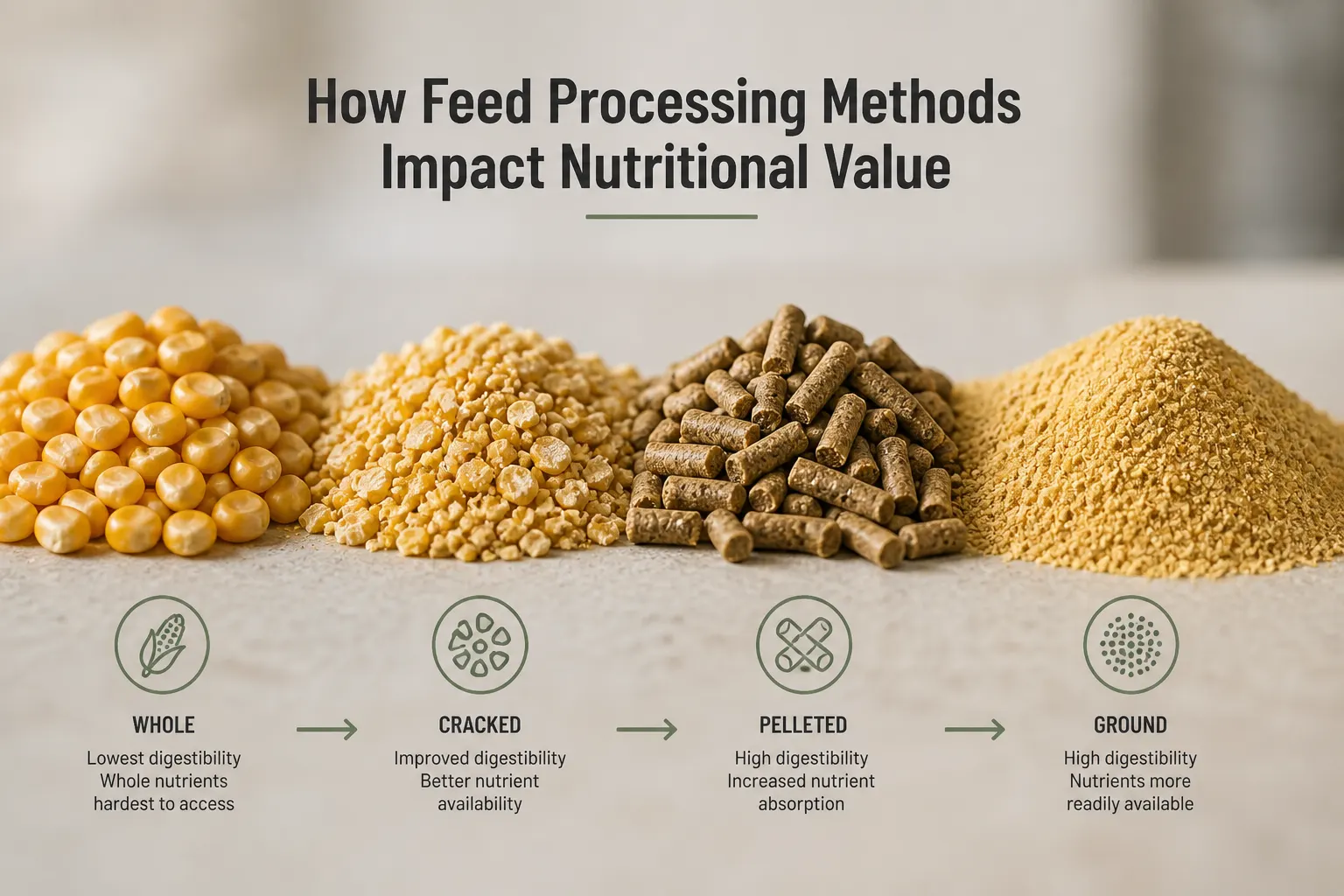
How Feed Processing Methods Impact Nutritional Value
1 May 2026 - Admin
Feed is the foundation of livestock productivity in a country like India where feed resources are different in quality. Feed processing method matters a lot here as they play a big role in how animals use nutrients. So whether you’re a dairy farmer, poultry producer or even a livestock owner, it’s important to understand how processing affects the feed quality. This is how you can improve animal health, milk yield, growth rates along with the overall profitability.
Feed processing is all about transforming raw materials like grains, crop residues as well as fodder. Prodigy Foods uses high-quality inputs such as like DDGS which matter a lot to improve feed efficiency. They are made into forms which are also a lot more easier for animals to digest. You can enhance nutritional value, feed efficiency and cost effectiveness all with the right processing technique. But poor processing can lead to nutrient loss, contamination as well as less animal performance. Optimizing feed quality through processing is important as feed costs go up in India. This blog discusses how feed processing methods impact nutritional value.
Key Statistics on Feed Processing in India
In India, about 60 to 70% of the product costs of livetsocks come from feed itself. This is what makes efficiency a lot more important for profitability. Source: Agriculture Institute
What is Feed Processing?
There are different types of treatments in feed processing which include mechanical, thermal, chemical or biological. These are there to improve how useful feed really is for animals.
Proper feed processing helps with these according to the Food and Agriculture Organisation:
- Increase nutrient availability
- Improve digestibility
- Reduce feed wastage
- Support better animal productivity
This is even more important in India because a lot of animals here are in fact fed fibrous materials. These are very difficult to digest for them unless it is processed.
Why Feed Processing Important in India
There are some unique issues with livestock farming in India like:
- Heavy dependency on crop residues and by-products
- Seasonal shortage of green fodder
- Limited awareness of scientific feeding methods
This is what leads to an issue where animals can’t really get full benefit of the feed they consume. So this gets better with feed processing which helps bridge this gap. It converts low-quality inputs into feed that is more digestible along with nutritionally efficient.
What Are The Major Feed Processing Methods And Their Impact?
Grinding and Chopping
This is one of the most common feed processing methods in India you’ll see. They’re also very easily available across India.
How it impacts nutrition:
- This is what breaks feed into smaller particles
- Improves digestibility and nutrient absorption
- Reduces wastage and improves intake
Chopped straw is a lot easier for animals as they can digest it a lot better. That is so if you compare it to long and unprocessed stalks.
Pelleting
Pelleting actually turns feed into compact and uniform pellets. This is possible by using heat, moisture and pressure.
Nutritional impact:
- Improves starch digestibility by 15 to 25%
- Ensures consistent nutrient intake
- Reduces feed wastage and sorting
A method like this is very widely used in poultry as well as dairy farming. This is because it makes feeding a lot more efficient as well as predictable.
Heat Treatment (Roasting, Steam Flaking)
Heating feed components can very greatly enhance the quality if you do it properly.
Effect on feed quality:
This degrades complex carbohydrates
- This enhances energy content by as much as 30%
- Improves uses of protein
- Too much heat can badly affect sensitive components.
Fermentation and Ensiling
The process involves the use of microorganisms for improving feed quality in a natural manner.
Advantages:
- Increases nutritional value (proteins and vitamins)
- Facilitates good digestion
- Helps in preserving feed
Recently, many Indian farmers have begun looking into the possibility of fermentation of feeds because it is economical to do so.
Chemical Treatment (Urea Treatment of Straw)
This method is very useful if you want to improve dry crop residues:
Nutritional impact:
- Breaks down tough fibers like lignin
- Improves digestibility
- Adds nitrogen, boosting protein value
There’s no doubt that this is in fact a practical solution in regions where straw is the main feed source.
Enzyme Supplementation
Feeding supplements have enzymes which can help animals digest food effectively.
Effects:
- It improves the digestion of fibers and carbohydrates.
- It reduces the presence of anti-nutritional elements.
- It increases feed efficiency.
This method is often practiced in modern or commercial agriculture practices.
Factors that Influence the Nutritional Content of Processing
Despite the best efforts of processing, it still needs to be done with caution because the end result of feed quality is influenced by:
- Temperature and moisture content
- Length of time for processing
- Quality of the input materials
- Storage after processing
Advantages of Good Feed Processing to Indian Farmers
There are many advantages that come from effective feed processing. These include:
- Increased milk yield and growth rate
- Increased feed conversion ratio (FCR)
- Reduced wastage of feeds
- Better health and increased immunity
- Savings on cost of feeds
These may be simple things but they will result in higher income for farmers.
Challenges In Adoption
Even with these benefits, there are several challenges that exist for Indian farmers:
- Low knowledge or training
- Expensive machinery costs at the onset
- Difficulty accessing processing technology in rural areas
- Variability in feed quality
Closing the gap in these challenges will lead to improved results.
Conclusion
Feed processing can look like a small step but that’s not always what it is. It’s important to know that they have a very big impact on how much nutrition animals are getting. India is where the right processing method can change a lot of things because low quality roughages are used a lot here. So this way, you get nutrients and also improve the overall feed value.
Every method is leading to better digestibility, efficiency as well as animal performance. It’s important to understand these methods especially by farmers and livestock businesses. All you have to do is work with an experienced suppliers like Prodigy Foods to ensure better better feed quality. This is how you get higher productivity, healthier animals all with better returns.
Frequently Asked Questions
Q – What is feed processing in livestock farming?
A – Feed processing is about treating raw feed ingredients which is done using different methods. This is how you can improve your nutritional value and make it easier for animals to digest.
Q – How does digestibility get better with feed processing?
A – This happens as complex nutrients turn into simpler forms here which helps a lot. This way, animals can absorb and use them more a lot better.
Q – Which feed processing method works the best in India?
A – These include pelleting, grinding and fermentation which are widely used. This is because they improve nutrient availability and reduce feed wastage.
Q – Is it true that heat processing can nutrient?
A – Extra heat can destroy important vitamins and amino acids which happens if it’s not controlled properly
Q – Why is urea treatment used for straw?
A – This is how tough fibers are broken down. This also increases the protein value of straw which makes it more nutritious.