
 Get a quote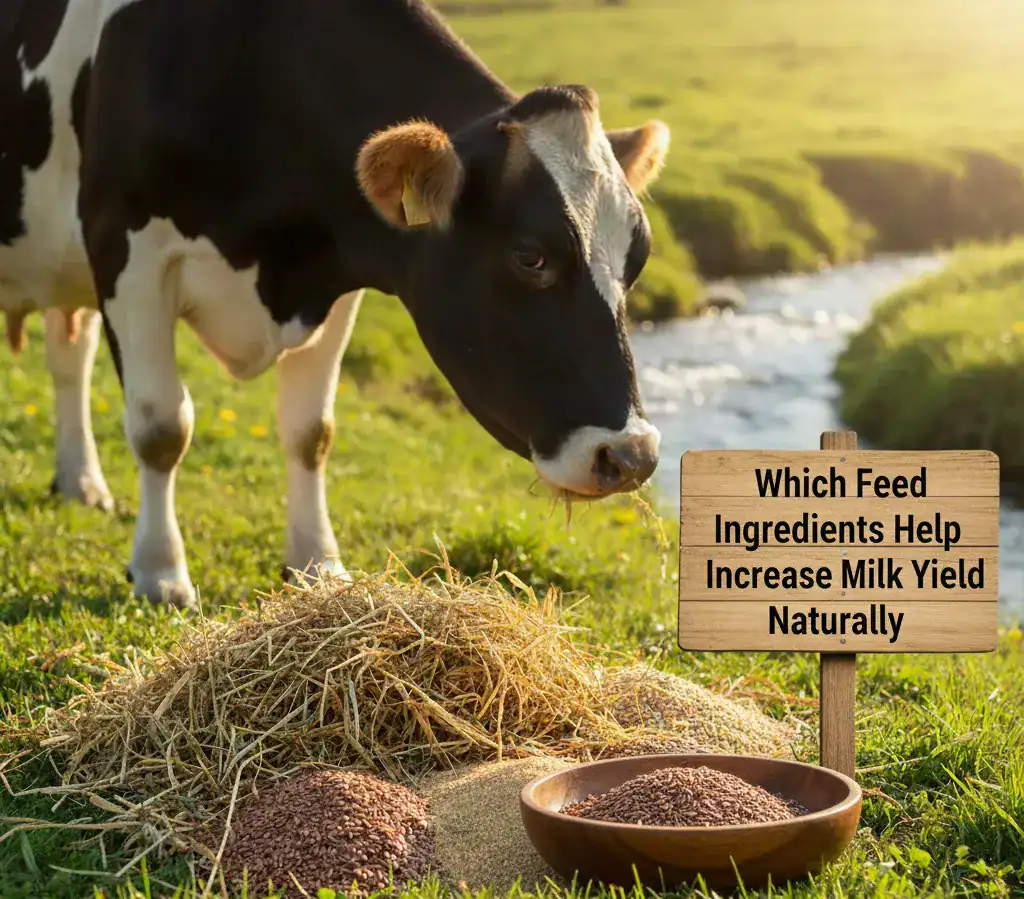
Which Feed Ingredients Help Increase Milk Yield Naturally
9 Jan 2026 - Admin
For dairy farmers, increasing milk yield isn’t all about the output. It’s about doing so consistently, sustainably, and without compromising animal health. Things like management do play a role here. But nutrition is still the most controllable factor. They influence milk production. Choosing the right feed ingredient can improve milk yield. This supports rumen health, metabolic balance, and long term productivity.
In this blog, we discuss key feed ingredients that help increase milk yield naturally.
What Research Reveals About Nutrition and Milk Yield?
Want to know what the scientific studies show? They show that nutritional improvements can deliver gains in milk production. The Journal of Dairy Science had many controlled trials. They reported that supplementing lactating dairy cows with biotin increased milk yield by an average of 1.66 kg per cow per day.
This comes with improvements in dry matter intake. The study highlights how some feed nutrients can affect metabolic efficiency. They can also affect milk synthesis when used into balances rations. Source: Science Direct

Why Feed Quality Directly Impacts Milk Production?
Milk production is a biological processa which isnutrient intensive. A lactating cow must convert food into:
- Energy
- Protein
- Milk components
Your milk yield suffers when the diet falls short in:
- Energy
- Protein
- Digestibility
Well balanced feed improves:
- Dry matter intake
- Rumen microbial efficiency
- Nutrient absorption
- Energy availability for milk synthesis
This is why ingredient selection matters just like feeding quantity does.
High Quality Forage: The Base of Every High Yield Ration
Forage forms the backbone of milk production. Do you know how high quality forage supports rumen health? These stimulate cud chewing and saliva production. It is critical for maintaining rumen pH.
Ideal Forage Options
- Alfalfa and legume forages
- Ryegrass
- Mixed grass silage
- Corn and sorghum silage
Good forage quality improves feed intake. It also ensures steady energy release through rumen fermentation.
Why Digestible Fiber Matter
Fiber isn’t just bulk. Digestible neutral detergent fiber is what fuels rumen microbes. This produces volatile fatty acids. The cow’s primary energy source for milk production.
Protein Ingredients That Drive Milk Synthesis
Protein supplies the amino acids needed to build milk proteins. Both the quantity and quality of protein matter.
Effective Natural Protein Sources:
- Soybean meal
- Canola meal
- Distillers dried grains
- Legume grains
These ingredients provide a balance of:
- Rumen degradable protein
- Rumen undegradable protein
The Role of Limiting Amino Acids
Methionine and lysine are mostly limiting in dairy diets. These can decline if the amino acids are insufficient:
- Insufficient
- Milk yield
- Milk protein
Rumen protected amino acids help overcome this limitation. This can improve production efficiency.
Energy-Rich Feed Ingredients for Sustained Yield
Milk production demands large amounts of energy. This is especially during early lactation. Do you know what happens if the energy intake does not meet requirements? Cows enter:
- Negative energy balance
- Reduced milk yield
- Health challenges
Natural Energy Sources:
- Maize and barley
- Molasses
- Bypass fats
- Vegetable oils
Molasses improves palatability and feed intake. Bypass fats supply concentrated energy without disturbing rumen fermentation.
What Are The Functional Feed Additives That Support Natural Production?
Biotin:
Biotin is the one that supports glucose metabolism and hoof health. This is what leads to better mobility and feeding behavior. This indirectly supports higher milk yield over time.
Yeast and Probiotics:
Live yeast cultures stabilise:
- Rumen pH
- Enhance fiber digestion
- Support beneficial microbial populations
Better digestion means more nutrients, which is good for milk production.
Vitamins and Minerals
Calcium, phosphorus, magnesium, selenium, and vitamins A, D, and E are essential for:
- Metabolic efficiency
- Immune strength
- Reproductive health
- Even mild deficiencies can limit milk yield
Conclusion
Your milk yield can’t magically increase with a single ingredient. Using high quality forage is what pushes natural improvement. It comes from balanced protein and adequate energy.
This is when diets are designed to support rumen health and nutrient efficiency. Dairy animals are better equipped to express their genetic potential for milk production.
Frequently Asked Questions (FAQs)
Q – Which feed ingredient increases milk yield the most naturally?
A – There is no single ingredient. These have the greatest impact:
- High quality forage
- Balanced protein sources
- Adequate energy
Q – Can milk yield be increased without hormones?
A – Yes, these can improve milk yield:
- Proper nutrition
- Rumen health
- Feeding management
Q – How does protein quality affect milk production?
A – High quality protein supplies essential amino acids. They are needed for milk synthesis.
Q – Are probiotics useful for milk yield?
A – Yes. Probiotics improve:
- Digestion
- Nutrient absorption
Q – What role does biotin play in milk yield?
A – Biotin improves metabolic efficiency and hoof health.
Q – Is molasses safe for dairy cows?
A – Yes, when used in controlled amounts. It improves palatability and energy intake.
Q – Does water intake really affect milk yield?
A – Absolutely. Milk is mostly water, and inadequate intake directly reduces production.
Q – When should dairy rations be reviewed?
A – It’s best if you get the rations reviewed regularly. They really can’t be missed during changes in:
- Lactation stage
- Milk yield
- Forage quality